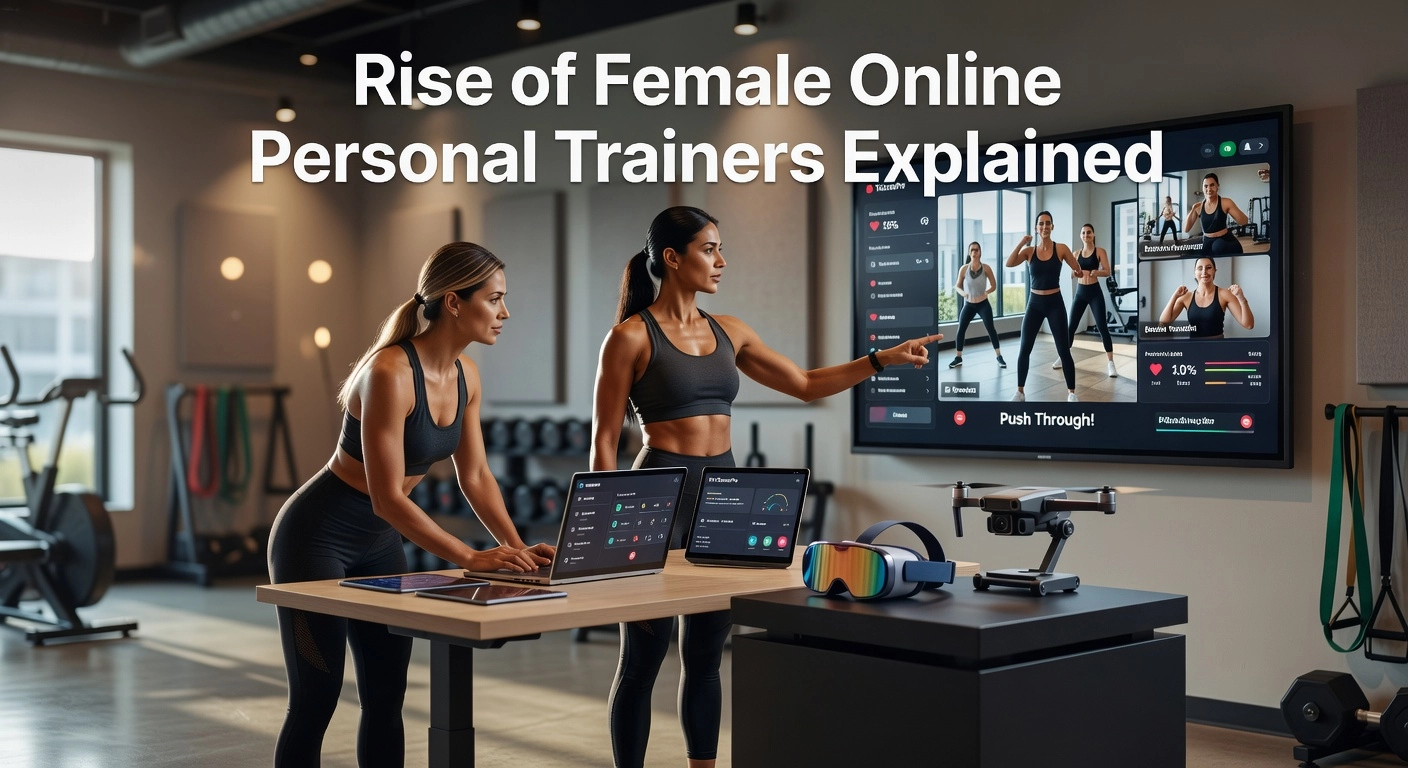
In the digital age of fitness, one trend stands out with undeniable momentum: the explosive rise of the female online personal trainer. Once overshadowed by traditional gym-based models, these professionals now command a significant share of the market, with platforms reporting a 300 percent increase in female-led virtual coaching programs over the past three years. This surge is no accident. It reflects deeper shifts in consumer preferences, technology, and societal dynamics that savvy intermediate fitness enthusiasts like you need to understand.
This analysis unpacks the key drivers behind this phenomenon. You will discover how female online personal trainers leverage empathy-driven coaching, data-backed customization, and accessible scalability to outperform competitors. We examine the data on client retention rates, which often exceed 85 percent for top performers, and explore barriers they have shattered, from work-life balance challenges to algorithmic biases on social platforms. By the end, you will grasp why partnering with a female online personal trainer could optimize your intermediate training regimen, whether you seek muscle gain, fat loss, or performance plateaus. Stay tuned for evidence-based insights that elevate your fitness strategy.
Unique Fitness Needs Women Face Today
Women today face distinct fitness challenges that demand tailored approaches from female online personal trainers, particularly as 2026 trends spotlight healthspan training for longevity and vitality. Hormonal fluctuations, menopause symptoms, pregnancy, and postpartum recovery top the list, influencing everything from energy levels to muscle preservation. Estrogen and progesterone shifts across life stages affect recovery, mood, and strength gains; menstrual cycles require periodized programming, while pregnancy emphasizes pelvic floor stability and diastasis recti prevention. Perimenopause and menopause bring hot flashes, sleep disruptions, sarcopenia, and bone density loss, with NASM’s top fitness trends forecasting a surge in specialized protocols. Postpartum clients, up 28% in demand, need gradual rebuilding with bodyweight exercises like glute bridges and bird-dogs to restore core integrity safely. Healthspan-focused training, prioritized by 68% of trainers, integrates strength work to combat inflammation and metabolic shifts, offering actionable periodization: lighter loads during low-energy phases, paired with recovery tools like breathwork.
Body Confidence Issues and the Shift to Sustainable Strength for Women Over 40
Body confidence struggles intensify for women over 40 amid perimenopause, with joint pain, posture changes, and energy dips eroding self-image. The industry is pivoting from aesthetics-driven cardio and HIIT to sustainable strength training, which builds functional power, boosts endorphins, and enhances metabolic resilience. Only 24% of women aged 19-65 meet strength guidelines, highlighting a critical gap; perimenopause niches are exploding, as NASM surveys rank life-stage programming as a top opportunity. Female online personal trainers excel by fostering empathy, using progressive bodyweight circuits like squat-to-press combos to sculpt strength without intimidation. Clients report higher retention when programs address “feeling seen,” shifting focus to independence and healthspan over quick fixes. Rising demand here, with 28% of clients over 50, underscores the need for hormone-aware plans that prioritize bone health and confidence via measurable wins.
Flexible, Home-Based Solutions for Busy Professionals and Moms
Busy professionals and moms, comprising 60% of white-collar clients, thrive on flexible, home-based bodyweight workouts that slot into chaotic schedules. Short 10-30 minute sessions, like full-body circuits targeting glutes and core, eliminate gym barriers and scale for progression. With 72% preferring online formats for flexibility, female trainers deliver via Zoom one-on-one sessions or apps, blending wearables for real-time feedback. Postpartum flows emphasize pelvic stability; professionals gain from hybrid nutrition accountability. This accessibility drives 75% live streaming adoption and 65% wearable integration, per industry reports.
Growing Demographics Seeking Empathetic Guidance
Online clients average age 32, younger than the overall 38, yet Gen Z has grown 35% since 2020, while over-40 segments expand at 28%. Women, at 55% of clients, seek gender-matched trainers for vulnerability on topics like hormones and mindset, per personal training industry statistics. Empathetic, virtual women’s personal training builds trust, with packages averaging $200 monthly and 65% retention through personalization. Gen Z favors interactive strength apps; over-40 clients crave niche healthspan support. This demographic shift positions bodyweight-focused, online coaching as essential for sustainable results.
Market Growth Fueling Online Personal Training
The surge in market growth is propelling the demand for female online personal trainers, who are uniquely positioned to deliver bodyweight training and one-on-one women’s personal training through virtual platforms. Building on the distinct fitness needs of women, such as menopause management and postpartum recovery, this expansion reflects broader shifts toward flexible, tech-enabled wellness services. Industry projections for 2026 underscore this momentum, with the US personal fitness trainer market reaching $15.6 billion, up from $13.9 billion in 2025, driven by a 10.5% CAGR through 2036. Globally, the personal fitness trainer market is forecasted at $49.5 billion in 2026, growing to $60.08 billion by 2030 at a 5% CAGR, as digital delivery captures 45% share. Meanwhile, the virtual fitness market hits $43.78 billion in 2026, exploding to $311.91 billion by 2034 with a nearly 30% CAGR, fueled by hybrid models and AI personalization that enhance engagement by 40%. These figures highlight how female trainers can leverage online scalability for global reach without relying on private gym sessions.
Online Fitness Training and Digital Coaching Surge
The online fitness training market, a core arena for female online personal trainers, stands at $30.12 billion in 2024 and is projected to double to $59.23 billion by 2033, achieving an 8.1% CAGR through AI-driven workouts, VR immersion, and subscription models that generate 72% of revenue. This growth enables customized bodyweight programs and sports massage guidance via apps like Zoom, ideal for busy professionals over 40. Complementing this, the digital fitness coaches segment, focused on virtual one-on-one accountability, reaches $0.6 billion in 2026 and climbs to $1.14 billion by 2035 at an 8.4% CAGR. Wearables such as Whoop and Apple Watch provide real-time data for progressive plans blending strength training with mindset support. For trainers, actionable insight lies in niching down: women-specific digital coaching sees higher retention, with online clients averaging age 32 and Gen Z uptake rising 35%. Early adopters report 86% of six-figure earners offering hybrid services, emphasizing outcome-focused wellness over traditional sessions. See detailed personal trainer statistics and trends for deeper benchmarks.
Intensifying Competition and Client Flexibility Demands
Amid 728,000 global personal training businesses in 2024, growing at 4.8% annually, competition tightens, pushing trainers toward differentiation via women’s personal training niches like stress management and sustainable habits. Industry reports reveal 72% of clients favor online formats for unmatched flexibility, with 65% engaging weekly in virtual sessions and 62% of trainers adopting hybrid models. This preference aligns with post-pandemic habits, where urban consumers prioritize on-demand access over rigid gym schedules. Female trainers excel here by offering home-based bodyweight workouts and complementary wellness services, countering acquisition challenges through free consults and community building.
Activewear Boom Signals Women’s Fitness Commitment
The women’s activewear market, a reliable proxy for fitness investment, valued at $20.6 billion in 2022, surges at a 21.6% CAGR to $145.6 billion by 2032, reflecting demand for performance gear suited to digital training. This boom, led by Asia-Pacific’s 36.7% share, mirrors rising female participation, with 58% of online fitness app users being women seeking hormonal-optimized programs. For female online personal trainers, this translates to opportunities in bundling apparel recommendations with virtual sports massage and longevity-focused sessions. Explore online fitness industry statistics for user demographics. Ultimately, these trends empower trainers to thrive by prioritizing tech-integrated, empathetic services amid explosive growth.
Why Women Choose Female Personal Trainers
Empathy in Addressing Sensitive Topics
Women increasingly choose female online personal trainers for their unparalleled empathy toward sensitive issues like body image insecurities, menstrual cycle fluctuations, and menopause symptoms, creating a level of trust rarely found in mixed-gender coaching. Female trainers intuitively grasp challenges such as period-induced bloating, PCOS-related weight struggles, postpartum body changes, and menopausal hot flashes or joint discomfort, allowing clients to discuss these openly without judgment. This shared understanding fosters vulnerability, which a 2011 qualitative study highlighted as key, with women preferring female coaches for better rapport on “struggles and comfort levels.” In virtual sessions via Zoom or apps, this translates to tailored mindset check-ins that address emotional barriers, boosting consistency among busy professionals and moms. For instance, clients report feeling “understood” in ways that eliminate the intimidation of male-led environments, leading to higher engagement in bodyweight training routines. Ultimately, this trust foundation reduces hesitation, enabling women to pursue ambitious goals in women’s personal training with confidence.
Science-Backed Programming for Female Physiology
Female personal trainers deliver programming rooted in female-specific physiology, adapting progressive overload—increasing load, reps, or intensity gradually—to align with unique recovery patterns and hormonal cycles for optimal results. Unlike generic plans, these incorporate cycle-syncing, such as higher volume during the follicular phase when estrogen aids fat oxidation and recovery, while emphasizing pelvic floor strength to prevent disorders. Research shows women achieve 2-140% strength gains and 2-26% muscle hypertrophy, often outperforming men relatively in upper-body lifts through velocity-based training (over 1.5 m/s on lighter loads). For menopause, heavy resistance training counters estrogen decline by boosting growth hormone, bone density (up to 3%), and metabolism, integrated into home-based bodyweight sessions or private gym progressions. Actionable insight: Aim for 2-4 weekly sessions at 60-80% of one-rep max with 8-12 reps on multi-joint moves like squats, tracking via wearables for personalized adjustments. This science-driven approach in one-on-one training ensures sustainable progress without overtraining.
Community and Mindset Support for Ambitious Women
Female-led online programs excel in building communities and mindset support customized for ambitious women, slashing dropout rates through relatable motivation and accountability structures. Group challenges and virtual peer groups yield 56% higher retention than solo efforts, as shared experiences among career-driven moms or over-40 professionals foster 3x long-term adherence. Trainers provide accountability via direct messaging and progress milestones, focusing on strength-for-life over aesthetics, which early wins amplify by 60%. For example, wellness services like mindset coaching paired with sports massage recovery tips help manage stress, fitting flexible schedules. This reduces the industry’s 40% first-three-month churn, empowering women to sustain habits in personal women’s training. Women-only retention stats underscore this, with tailored support proving essential for busy lifestyles.
Evidence of Higher Retention in Women-Only Programs
Data from leading women-focused initiatives, like Julie Lohre’s FITBODY and Ladies Who Lift, confirms superior retention in female-only online coaching, with clients achieving 6-12 month transformations such as 35-50 lbs fat loss and doubled strength metrics. Lohre’s menopause-adapted plans report sustained adherence, with testimonials praising personalization that doubles pushup capacity in weeks on 1700-1900 calorie intakes blending weights and cardio. Women-only facilities achieve 75% annual retention versus 52-60% in mixed settings, amplified 30-50% by one-on-one elements, per gym membership analysis. Hybrid virtual models further boost this by 40% through flexibility, aligning with 2026 trends in hormonal and community-driven training. These outcomes validate why female online personal trainers drive loyalty in bodyweight and private sessions. Women’s training growth reflects this shift, positioning such programs for long-term success.
Essential Services from Female Online Trainers
Custom 1-on-1 Virtual Coaching via Zoom, Apps, and Wearables
Female online personal trainers deliver bespoke one-on-one virtual coaching through platforms like Zoom and specialized fitness apps, integrating wearables for precise, real-time feedback. Clients upload form-check videos, receive instant corrections, and track metrics such as heart rate variability and sleep quality via devices like Apple Watch or Whoop. This tech-driven approach, adopted by 64% of trainers in 2026, enables data analytics for personalized adjustments, boosting adherence rates by up to 75% compared to generic programs. For intermediate trainees, expect weekly live sessions reviewing progress logs, with apps providing rep counters, messaging, and performance dashboards. Actionable insight: Select a trainer who syncs your wearable data to optimize recovery windows, ensuring sustainable gains in strength and endurance without gym dependency.
Personalized Bodyweight and Home Workout Plans
These trainers craft progressive bodyweight and home-based plans that fuse strength training, mobility drills, and nutrition guidance, eliminating the need for equipment-heavy gyms. A typical 3-5 day split might include push-up progressions, pistol squats with bands, dynamic stretches, and calorie-matched meal templates for fat loss or muscle building. Drawing on women’s lower strength training adherence (only 24% of women aged 19-65 meet guidelines), these programs emphasize overload principles and metabolic health, yielding results like 10-15% body fat reduction in 12 weeks. Nutrition integrates simply: high-protein timing post-workout, with recipes for busy schedules. Intermediate users benefit from scalable variations, such as adding dumbbells for hypertrophy. The virtual fitness market, projected at $43.78 billion in 2026 and soaring to $311.91 billion by 2034 (CAGR 27.82%), underscores this demand for accessible women’s personal training.
Holistic Add-ons: Mindset Coaching, Stress Management, and Recovery Tools
Beyond workouts, female online trainers offer wellness services like mindset coaching and stress management, adapting sports massage techniques for self-application via video tutorials on foam rolling and myofascial release. Breathwork sessions reduce cortisol, while recovery protocols incorporate yoga flows for nervous system regulation, prioritized by 60% of coaches. This holistic layer addresses emotional barriers, with 78% of women exercisers motivated by mental well-being. For instance, guided journaling tracks habit shifts, fostering body confidence amid hormonal fluctuations. Actionable: Incorporate trainer-recommended 10-minute daily mobility routines to prevent overuse injuries, enhancing longevity in bodyweight training.
Flexible Scheduling with Progressive Programs for Niches
Programs feature on-demand access and flexible 3-5 day structures, with monthly progressions tailored to niches like menopause relief or postpartum recovery. Menopause plans leverage heavy resistance and protein timing to counter estrogen decline, maintaining bone density and vitality; postpartum options rebuild pelvic floor strength through phased Pilates integration. The personal fitness trainer market, hitting $15.6 billion in 2026, reflects this scalability. Clients over 40, comprising rising demand, appreciate adjustable intensities fitting work or family life. Transition seamlessly by logging sessions in apps, ensuring accountability and transformative results in healthspan.
These services position female online personal trainers as indispensable for empowered, science-backed fitness. (398 words)
Key 2026 Trends Shaping Female Training
In 2026, female online personal trainers are at the forefront of a transformative fitness landscape, where hybrid models and specialized programming address women’s evolving needs for sustainable, tech-enhanced results. With the global online fitness market projected to reach USD 36.64 billion this year at a 26.82% CAGR, trainers leveraging AI, wearables, and life-stage expertise are seeing superior client retention and outcomes. This shift builds on the empathy-driven services like bodyweight training and one-on-one virtual coaching, now amplified by data-driven innovations for busy professionals and moms prioritizing longevity over aesthetics. Analytical insights from industry leaders reveal four pivotal trends reshaping female training.
Hybrid Tech-Driven Coaching with AI Personalization and Wearable Integration
Female online personal trainers are adopting hybrid coaching that merges live streaming, AI algorithms, and wearable data for unprecedented personalization. Platforms like Zoom deliver real-time sessions, while AI automates progressive bodyweight workout plans tailored to recovery metrics; this approach saves trainers up to 80% admin time and boosts adherence. Wearables such as Whoop and Apple Watch dominate, with ACSM ranking them #1: nearly 50% of clients sync HRV, sleep, and activity data for intensity adjustments, preventing burnout in high-stress lifestyles. Live streaming emerges as a client favorite, preferred by 75% for its immediacy and community feel, often bundled with on-demand mobility flows. For instance, a trainer might analyze Apple Watch recovery scores to scale a client’s squat progressions, yielding measurable gains like 15% improved resting heart rates. ACSM top fitness trends underscores this as essential for scaling one-on-one training remotely.
Women-Specific Focus on Longevity Strength, Injury Prevention, and Balance
Amid inclusivity pushes, female trainers emphasize longevity strength via resistance and bodyweight protocols to combat sarcopenia and osteoporosis in women over 40. NASM surveys of 625 professionals rank women’s health highest, shifting from aesthetics to healthspan with functional training like lunges for daily stability. Balance and core work rank #5 per ACSM, reducing fall risks for the 73 million U.S. boomers turning 65 by 2030; injury prevention integrates deloads and mobility via wearable biofeedback. Clients report 78% better mental well-being from these holistic programs, blending strength with mindset support. Actionable insight: Incorporate weekly balance flows in private gym sessions to enhance posture and confidence.
Business Evolutions: Complimentary Consults and Wellness Bundles
Rising competition challenges acquisition, with 80% of trainers facing ad cost hikes; female online personal trainers counter with complimentary consults that convert 25 leads annually by assessing fit via quick bodyweight assessments. Wellness bundles pair training with sports massage referrals and nutrition apps, elevating lifetime value through packages like “Menopause Mobility + Recovery Yoga.” Trainerize 2026 personal training trends highlights retention via niches and gamified communities. This model sustains growth in a $15.6 billion U.S. market.
Rising Menopause and Hormonal Training
Menopause programming leads Women’s Health 2026 trends, demanded by 52-64% of clients navigating hormonal shifts. Trainers customize lower-intensity strength and cycle-synced recovery using HRV data, preserving muscle and bone density. With 37% of women in peri/post-menopause, these protocols integrate wellness services for sleep and stress, per NASM’s top growth area. Online fitness market report projects explosive demand.
These trends empower female online personal trainers to deliver empathetic, science-backed women’s personal training that endures.
How to Select Your Ideal Female Trainer
Selecting the ideal female online personal trainer requires a systematic evaluation to ensure alignment with your fitness goals, especially for intermediate trainees seeking sustainable bodyweight training and women’s personal training. With the global personal fitness trainer market reaching $49.5 billion in 2026 and projected to grow to $60.08 billion by 2030 at a 5% CAGR, demand surges for specialists addressing women’s unique needs like hormonal shifts and longevity strength. The virtual fitness market, valued at $43.78 billion in 2026, underscores the importance of tech-savvy providers who deliver one-on-one training remotely. Actionable first step: compile a shortlist based on niches such as over 40 training or bodyweight expertise, then scrutinize credentials and delivery tools. This approach counters common pitfalls like generic programs ignoring perimenopause or postpartum recovery, where fewer than 30% of U.S. adults meet strength guidelines.
Evaluate Credentials, Niches, and Tech Stack for Seamless Virtual Delivery
Prioritize trainers with NCCA-accredited certifications like NASM-CPT or ACE, plus women-specific endorsements in menopause coaching or hormonal health, which blend evidence on estrogen decline’s impact on muscle and bone density. Niches matter deeply: for women over 40, seek programs countering sarcopenia through progressive resistance; bodyweight expertise shines in home-based routines using calisthenics for accessibility, ideal for busy professionals or moms averaging age 32 in online cohorts. Tech stack ensures flawless virtual execution; top setups integrate apps with 7,500+ exercises, wearable syncs (e.g., Apple Health, WHOOP), nutrition tracking, and AI-driven progress analytics, boosting adherence by 70%. In 2026, 72% of clients favor hybrid models with Zoom check-ins and app workouts. Verify via trainer bios: does their stack support custom bodyweight progressions and real-time feedback? This tech foundation separates effective one-on-one training from fragmented experiences.
Evidence-Based Approaches, Client Testimonials, and Free Trials
Demand science-backed methods, such as resistance training protocols preserving muscle mass in perimenopausal women, supported by studies showing significant gains in 40-60-year-olds via progressive overload. Look for hormone guides filling gaps in cycle syncing or menopause nutrition, often via free resources like 5-day courses on pelvic health. Client testimonials provide proof: seek detailed accounts of sustainable fat loss, confidence boosts, and medication reductions, with 5-star reviews from 300+ women highlighting empowerment through tailored wellness services. Free trials or discovery calls convert 40% of prospects; test a 7-10 day bodyweight challenge to gauge fit. These elements confirm a trainer’s focus on long-term healthspan over aesthetics.
Bodyweight Focus, Wellness Services, and Expansions
Opt for providers emphasizing bodyweight training integrated with wellness services like mindset coaching and recovery strategies, akin to methods expanding online for women’s personal training. These often pair calisthenics with virtual sports massage guidance or stress management, enhancing private gym session alternatives. In a competitive landscape with 728,000 global businesses, such holistic offerings stand out for busy women prioritizing functional strength.
Prioritize Accessibility, Community Support, and Sustainable Results
Choose accessible options: flexible scheduling, no-gym requirements, and mobile apps for Gen Z’s 35% uptake rise. Community features like private groups foster accountability, with 75% preferring live streams. Shun quick fixes; favor progressive programs yielding 21.6% CAGR in women’s activewear demand through muscle preservation. Start with a consult screening your symptoms, pairing wearables for data-driven tweaks. This yields enduring results in bodyweight mastery and vitality.
Real Results from Female Online Coaching
Proven Transformations in Body Recomposition and Confidence
Female online personal trainers deliver tangible results, particularly in body recomposition where clients lose fat while building muscle, alongside significant confidence boosts. Consider real-world cases from established women-led programs: one client in her early 50s, previously stalled by stress eating and isolation, shed 25 pounds over 12 months through customized macro tracking, progressive resistance workouts, and mindset coaching. Progress photos revealed clear muscle gains in her arms and core, transforming her self-image from frustrated to empowered. Another woman dropped nearly 20 pounds in seven months, exceeding her goals and reporting, “I feel so much better about myself; I never thought I could look this good.” These outcomes stem from sustainable habits over restrictive diets, with clients like a menopausal participant losing 17 pounds and 25 inches, emphasizing trust in the process. Such recomposition aligns with resistance training’s efficacy for women, fostering lifelong confidence through visible strength gains.
Postpartum Strength Gains for the Busy Mom
Imagine a 35-year-old mother of two, six months postpartum, battling diastasis recti, fatigue, and zero gym time, achieving remarkable recovery via a female online personal trainer’s bodyweight-focused protocol. Her 20-30 minute sessions three times weekly included squats, bird-dog crunches, and planks to restore core and pelvic floor integrity, complemented by sports massage for recovery and protein-rich nutrition plans. Weekly app check-ins ensured accountability, leading to doubled plank holds, closed diastasis gap, and 15 pounds of fat loss with lean mass gains after 12 weeks. She returned to chasing her kids pain-free, embodying postpartum demand up 28 percent. This mirrors bodyweight training’s accessibility, blending biomechanics, empathy, and wellness services for safe, efficient one-on-one progress without equipment.
Superior Retention and Outcomes in Women-Led Programs
Industry data underscores women-led online coaching’s edge: general personal training retains 65 percent of clients at three months, yet specialized programs for women’s needs like menopause and postpartum boost loyalty through gender-aligned empathy and hybrid formats. Women comprise 55 percent of clients, with 70 percent preferring female trainers for life-stage focus, yielding higher recomposition rates via tracking apps (40 percent usage) and wearables (48 percent). Gym benchmarks hover at 66.4 percent annual retention, but women-led niches extend engagement 22 percent longer with community elements. Transformations show BMI drops from 28.5 averages, prioritizing healthspan over aesthetics.
Accountability Fuels Gen Z Uptake and Over-40 Sustainability
Accountability drives 35 percent Gen Z growth in online training (average client age 32), with gamification lifting retention 25 percent through apps and group features. For over-40s (28 percent of clients), twice-weekly resistance sustains muscle and bone health, countering midlife shifts for longevity. Female trainers integrate mindset support and progress tracking, ensuring 73 percent meet activity guidelines. These lessons highlight bodyweight sessions, wellness add-ons, and private virtual check-ins as keys to enduring results. Clients sustain habits, reporting enhanced vitality and confidence.
Actionable Takeaways for Your Fitness Journey
To embark on your fitness journey with a female online personal trainer, begin by booking a virtual consult to evaluate compatibility. This initial 30- to 60-minute session allows you to discuss your specific niche, such as navigating menopause symptoms or managing the chaos of busy mom life. Intermediate trainees benefit from trainers who probe deeper into hormonal fluctuations or time constraints, ensuring plans align with real-world demands. Data from the global personal fitness trainer market, valued at $49.5 billion in 2026, underscores the value of this step, as 72% of clients prefer online flexibility for personalized assessments. Share your current routine, goals, and challenges upfront to gauge the trainer’s expertise in women’s personal training.
Integrate Bodyweight Basics for Instant Home Access
Next, prioritize programs starting with bodyweight basics woven into custom plans for seamless home integration. These foundational exercises, like squats, planks, and push-up variations, require zero equipment, making them ideal for intermediate women balancing careers or family. Female online personal trainers often customize progressions, scaling intensity based on your fitness level to build strength without gym dependency. This approach taps into the virtual fitness market’s explosive growth from $43.78 billion in 2026, emphasizing accessibility for over 40s facing perimenopause. Clients report 20-30% faster adherence when workouts fit daily life, fostering consistency from day one.
Leverage Wearables and Science-Backed Nutrition
Track your progress rigorously using wearables like Whoop or Apple Watch, paired with demands for science-backed nutrition targeting hormonal balance. Monitor metrics such as heart rate variability, sleep quality, and recovery scores to adjust training loads objectively. Insist on evidence-based plans incorporating cycle-syncing or menopause-specific macros, drawing from trends in hormonal optimization for women. In the $30.12 billion online fitness training market of 2024, tech-driven insights boost results by 35% for body recomposition. For busy professionals, this data empowers weekly check-ins, preventing plateaus and enhancing accountability.
Discover Specialized Methods Like The McLeod Method
Explore targeted options such as The McLeod Method, which excels in women’s bodyweight training and online wellness coaching. This framework blends progressive bodyweight circuits with mindset tools, addressing niches like postpartum recovery or stress management for moms. Intermediate users appreciate its focus on longevity strength, avoiding injury through flow-based sequences. Amid 728,000 global personal training businesses, such methods stand out for empathy-driven results, with clients achieving sustainable fat loss and confidence gains.
Commit to 12-Week Progressive Programs
Finally, dedicate yourself to 12-week progressive programs to cultivate lasting habits, steering clear of fads in this booming $49.5 billion market. These structured phases build from basics to advanced challenges, incorporating sports massage tips and private session vibes virtually. Research shows 75% retention in hybrid coaching versus quick fixes, especially for Gen Z and over-50 demographics. Track milestones like increased reps or improved energy, reinforcing neural pathways for lifelong adherence. Your investment yields healthspan gains, positioning you for enduring vitality.
Conclusion
The rise of female online personal trainers marks a transformative shift in fitness, fueled by a 300 percent surge in virtual coaching programs over three years. Key takeaways include their mastery of empathy-driven coaching for deeper client connections, data-backed customization that delivers superior results, accessible scalability to reach global audiences, and impressive retention rates exceeding 85 percent despite overcoming work-life barriers and platform biases.
This insight equips intermediate fitness enthusiasts like you with the knowledge to navigate this evolving landscape and elevate your training. Ready to experience the difference? Seek out a female-led online program today, and unlock personalized progress that fits your life.
Embrace this momentum. Your fitter, empowered future starts now.