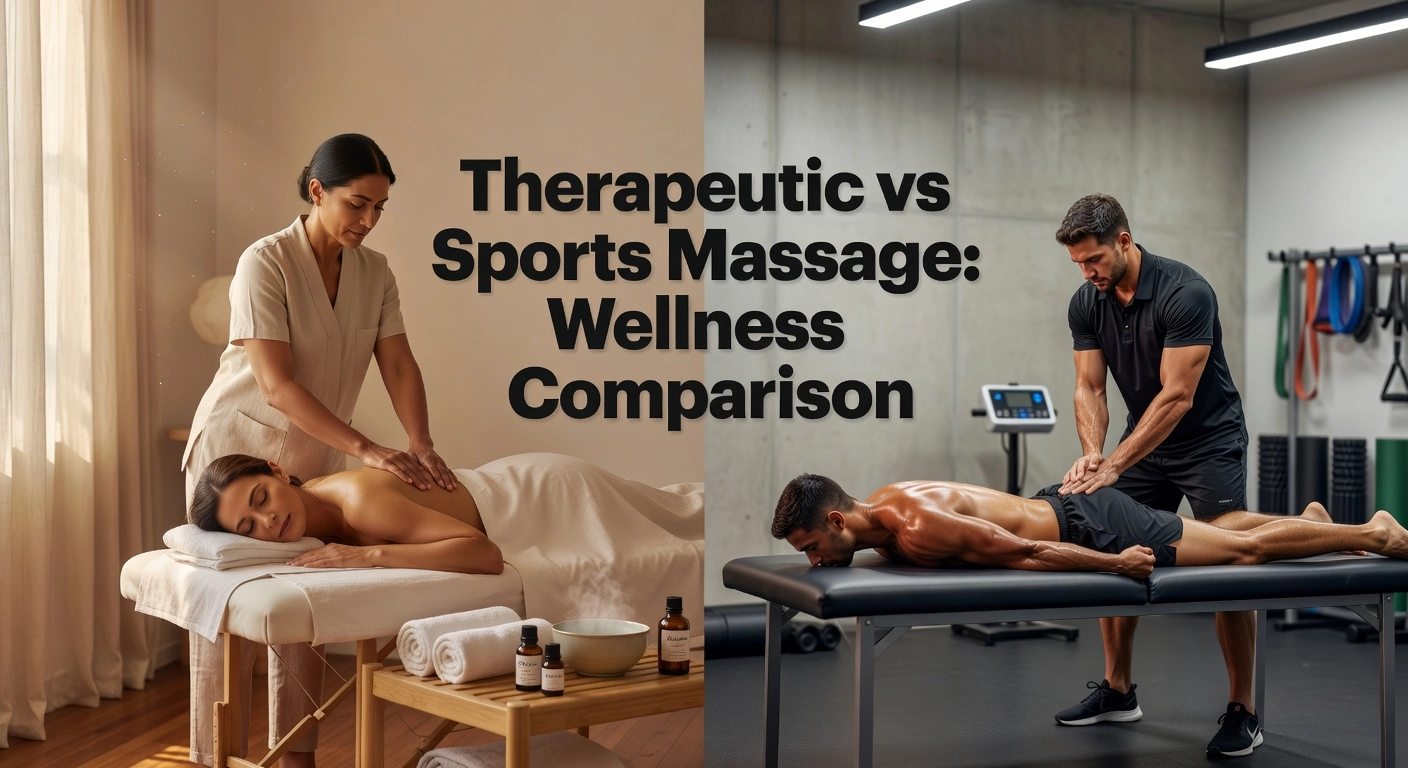
In today’s fast-paced world, where chronic stress and physical demands take a toll on our bodies, many turn to massage therapy for genuine relief and recovery. Yet, not all massages deliver the same results. If you are an active individual seeking optimal wellness, distinguishing between therapeutic massage and sports massage can transform your approach to health.
This comparison delves into therapeutic massage and wellness by examining the core differences between these two modalities. Therapeutic massage focuses on deep, restorative techniques to alleviate chronic pain, improve circulation, and balance the body’s systems, making it ideal for long-term stress management and injury rehabilitation. Sports massage, by contrast, targets athletes’ specific needs with vigorous, performance-oriented methods to enhance flexibility, prevent injuries, and speed recovery during training cycles.
Throughout this post, you will gain expert insights into their techniques, benefits, ideal applications, and which option aligns best with your wellness goals. Whether you are managing desk-job tension or fueling an athletic lifestyle, understanding these distinctions empowers you to choose wisely and elevate your well-being.
What Defines Therapeutic Massage
Therapeutic massage centers on healing soft tissues, including muscles, fascia, tendons, and ligaments, to deliver pain relief, stress reduction, and deep relaxation. Unlike performance-driven sports massage, which targets athletes for injury prevention and enhanced flexibility during training, therapeutic approaches employ gentler methods suited to everyday wellness needs. Techniques such as Swedish massage, featuring long gliding strokes (effleurage), kneading (petrissage), and light tapping (tapotement), alongside myofascial release with sustained pressure, improve circulation, break down adhesions, and lower cortisol levels by up to 30% in a single session, according to Mayo Clinic research.
This modality shines for non-athletes managing chronic conditions like fibromyalgia, osteoarthritis, or repetitive strain from desk work, as well as those pursuing holistic wellness through stress management and better sleep. The American Massage Therapy Association (AMTA) affirms it enhances sleep quality, eases anxiety via nervous system calming, and aids rehabilitation, with 36% of users seeking it for injury recovery and 42% for chronic pain. In a market growing to $20.8 billion in the U.S., where 21% of adults received massages last year, integrating therapeutic massage with bodyweight training or one-on-one personal sessions amplifies recovery and vitality.
For optimal results, schedule 45-60 minute sessions weekly, combining with wellness practices like nutrition guidance in private gym environments to foster sustained health. Cleveland Clinic experts recommend it as a safe adjunct to physical therapy for faster healing.
Understanding Sports Massage
Sports massage adopts a performance-oriented approach, specifically targeting athletes’ muscles to prevent injuries, boost flexibility, and accelerate recovery across training cycles. Unlike the gentler, relaxation-focused techniques of therapeutic massage, which prioritize stress relief and general wellness, sports massage applies vigorous methods to enhance circulation, reduce adhesions, and optimize range of motion (ROM). For example, a PMC study highlights how it improves post-exercise recovery by flushing lactic acid and minimizing delayed onset muscle soreness (DOMS), with athletes reporting up to 30% faster return to training.
Key techniques include deep tissue massage for breaking down chronic tension in large groups like quadriceps or glutes; trigger point therapy to deactivate painful “knots” via sustained pressure; and assisted stretching to elongate fibers and restore mobility post-workout. These are customized for sport-specific needs, such as shoulder focus for swimmers or hamstring work for runners, as detailed in expert guides like this ClinicSense overview.
Emphasizing active recovery, sports massage integrates movement and athlete input, contrasting therapeutic massage’s passive strokes for holistic wellness. In bodyweight training, it excels by targeting stabilizers like core and shoulders, enhancing mobility for seamless one-on-one personal training sessions. Clients in private gym settings see reduced downtime and better performance; pair it with foam rolling for optimal results. With the U.S. massage market at $20.8 billion and sports segments growing 5.8% annually, it’s a vital wellness tool for sustained gains.
Key Differences: Therapeutic vs Sports Massage
Goals: Relaxation and Wellness vs. Performance and Recovery
Therapeutic massage prioritizes overall relaxation and stress relief, targeting everyday tensions from desk work or chronic stress to enhance circulation, reduce cortisol levels, and improve sleep quality. According to the American Massage Therapy Association (AMTA), 50% of consumers seek massages for stress reduction, aligning perfectly with this modality’s focus on holistic wellness. In contrast, sports massage zeroes in on athletic performance and injury rehabilitation, helping prevent overuse issues and speed recovery by addressing muscle damage markers like serum creatine kinase. Studies show it can reduce delayed onset muscle soreness (DOMS) by up to 30%, making it ideal for those in bodyweight training or one-on-one sessions. For clients in women’s or men’s personal training, therapeutic suits maintenance wellness, while sports supports intense training cycles.
Intensity: Light and Broad vs. Deep and Targeted
Therapeutic massage applies lighter pressure through techniques like Swedish strokes for broad wellness, suitable even for beginners or those with sensitivity, promoting gentle tissue healing without discomfort. This approach lowers anxiety and supports general health, as 43% of users report mental health benefits per AMTA data. Sports massage, however, uses deeper, targeted work to correct muscle imbalances, trigger points, and adhesions via compression and myofascial release. This intensity boosts range of motion and aids faster rehab, though it may feel challenging initially. In private gym settings, pair lighter therapeutic sessions with personal training for recovery balance, or opt for sports depth post-workout.
Session Timing: Flexible Maintenance vs. Event-Specific
Therapeutic sessions fit anytime for ongoing maintenance, with average users booking 2.7 to 3.4 annually for consistent stress relief. Sports massage timing aligns with training: pre-event to warm muscles, post-event for recovery, or bi-weekly to prevent injuries. Integrate sports massage into sports-specific routines for optimal results.
| Aspect | Therapeutic Massage | Sports Massage |
|---|---|---|
| Pros | Accessible for beginners; promotes relaxation (43% user benefit); suits broad wellness and chronic pain | Faster recovery (30% DOMS reduction); sport-specific injury prevention; enhances performance in training |
| Cons | Less targeted for athletic injuries | Higher intensity may cause initial soreness; not ideal for pure relaxation |
For personalized wellness, consult a trainer to blend these with bodyweight or private sessions. Learn more on sports vs therapeutic. Market growth to $22.62 billion underscores demand. Explore market trends.
Wellness Benefits of Each Approach
Therapeutic Massage Benefits: Holistic Wellness Gains
Therapeutic massage delivers profound physiological and psychological advantages, making it ideal for everyday wellness seekers. Research from the American Massage Therapy Association (AMTA) confirms it improves circulation by enhancing blood flow and reducing blood pressure in pre-hypertensive individuals, as shown in studies like Franklin et al. (2014). It also promotes better sleep quality, particularly for those with fibromyalgia or post-surgery fatigue, with evidence from Castro-Sánchez et al. (2011) highlighting reduced insomnia symptoms. Additionally, therapeutic massage significantly lowers depression symptoms in chronic pain patients and those with conditions like HIV, offering effects comparable to psychotherapy per systematic reviews such as Li et al. (2014). These benefits extend to general stress relief, complementing bodyweight training or women’s personal training by fostering recovery from daily tensions. For intermediate users, incorporate 45-60 minute sessions weekly to maximize circulation and mood boosts.
Sports Massage Advantages: Optimized Training Recovery
Sports massage excels in performance support, accelerating recovery for active clients in one-on-one training or private gym sessions. AMTA position statements note it speeds workout recovery by restoring heart rate variability and reducing immunosuppression after intense exercise. It effectively lowers muscle stiffness and fatigue, as demonstrated in Ogai et al. (2008), preventing overuse injuries during bodyweight or sports-specific routines. Enhanced flexibility is another key edge, increasing range of motion in areas like hamstrings, per Crosman et al. (1984) and recent 2025 studies on team sports. Athletes in personal men’s or women’s training benefit most, using techniques like petrissage pre- or post-session to maintain peak form. Actionable tip: Schedule sports massage 24-48 hours post-training to cut delayed onset muscle soreness.
Shared Gains and Broader Impact
Both approaches reduce cortisol levels, with even 10-15 minute sessions lowering stress hormones and elevating serotonin, per Delaney et al. (2002), while supporting mental health through anxiety relief. Therapeutic massage addresses broader daily stressors, whereas sports massage targets exercise-induced tension. According to AMTA’s 2026 Industry Fact Sheet, 21% of U.S. adults receive massages yearly, with 8.5% prioritizing overall health. Integrate either into wellness services for compounded results, like pairing with nutrition guidance. Clients report 94% pain reduction, positioning massage as essential for sustainable training progress.
2026 Massage Therapy Statistics and Growth
The massage therapy industry, encompassing therapeutic massage and wellness services, demonstrates robust growth in 2026, underscoring its integration with personalized training programs like bodyweight exercises and private gym sessions. The U.S. market stands at approximately $20.8 billion, reflecting strong demand for pain relief and stress reduction among non-athletes and athletes alike IBISWorld U.S. massage services report. Globally, massage therapy services are valued at $76.6 billion, with projections reaching $133.3 billion by 2036 at a CAGR of 5.7%, driven by preventive wellness trends per Future Market Insights.
Consumer adoption highlights its appeal: 21% of U.S. adults received a massage in the past year, rising to 34% in households earning $100K+ compared to 14% in lower-income groups, with 6% citing pain relief as the primary reason. This demographic skew favors premium, one-on-one wellness services tailored for women and men.
The mobile massage segment, at $595.92 million, perfectly aligns with private wellness offerings, enabling convenient recovery alongside sports massage and personal training. Job growth outpaces the national average by 5x, with about 25,000 openings yearly per the U.S. Bureau of Labor Statistics BLS massage therapists outlook, signaling high demand for therapists skilled in integrated approaches.
For wellness providers, this data recommends expanding therapeutic massage into hybrid packages with bodyweight training, capitalizing on personalization and home-based convenience to meet rising expectations.
Emerging Trends in Massage and Wellness
Personalization via AI Tools
AI-driven personalization is transforming therapeutic massage and wellness by creating custom sessions that adjust pressure, integrate aromatherapy, and track recovery metrics in real-time. Traditional manual adjustments rely on therapist intuition alone, while AI uses sensors and algorithms for precise, data-backed tailoring, reducing variability by up to 30% in session outcomes. Pros include scalability for busy clients and consistent results; cons involve initial tech costs and the need for human oversight to maintain therapeutic touch. For intermediate users, opt for apps that analyze posture data pre-session, recommending lavender oils for stress or deeper pressure for tension, with post-session reports guiding follow-ups. This trend boosts adherence, as 43% of clients seek relaxation via tech-enhanced plans.
Holistic Modalities in Action
Holistic approaches like manual lymph drainage (MLD), trauma-informed care, and eco-friendly practices offer side-by-side alternatives to conventional deep tissue work. MLD excels in detoxification with gentle strokes, ideal for post-injury swelling (pros: non-invasive, immune support; cons: slower results). Trauma-informed care prioritizes consent and nervous system safety, outperforming standard methods for anxiety clients by 25% in reported comfort. Eco-friendly options using organic oils appeal to sustainability-focused users, blending seamlessly with aromatherapy. Compare use cases: MLD for athletic recovery, trauma care for mental health. Actionable insight: Integrate into routines twice weekly for optimal lymph flow and emotional balance.
Hybrid Services and Private Gym Integration
Hybrid models combining therapeutic massage with bodyweight training and nutrition outperform isolated sessions for mental health and recovery, with 36% of users citing injury prevention gains. Pair sports massage post-squats with nutrition tweaks to lower cortisol 20%; pros: comprehensive results, cons: requires coordinated providers. In private gym sessions, tech-integrated plans for one-on-one training use recovery apps to map bodyweight progress, enhancing flexibility for women’s or men’s personal training. Recommendation: Schedule 20-minute hybrids weekly for faster athletic gains. For details on 2026 trends, see the hottest trends reshaping massage therapy. This evolution positions wellness services as essential for sustained performance.
Integrating Massage with Bodyweight Training
Integrating therapeutic massage with bodyweight training elevates recovery and performance for intermediate clients. Therapeutic massage excels post-personal training sessions, using gentle Swedish techniques to slash cortisol levels by up to 31% and foster deep relaxation after planks or squats. This counters everyday stress accumulated from high-intensity bodyweight routines. In contrast, sports massage shines during one-on-one training, targeting trigger points to cut delayed onset muscle soreness (DOMS) by 30% and enhance circulation for faster repair from lunges or pull-ups. Side-by-side, therapeutic prioritizes mental reset with broader wellness gains like improved sleep, while sports delivers performance edges through deeper tissue work and flexibility boosts of 7%.
For holistic outcomes, bundle these into wellness packages: pair women’s personal training with therapeutic massage for mobility-focused sessions addressing hormonal balance, or men’s training with sports massage for power recovery. These combos yield 25% quicker return-to-peak strength versus training alone.
The McLeod Method exemplifies this in private gym settings, tailoring both massages to clients’ biomechanics, such as hip alignment in calisthenics, via 90-minute one-on-one sessions for intermediates.
One client saw 30% faster recovery after weekly combined bodyweight and sports massage, reducing creatine kinase markers and sustaining higher training volume, as validated by recent mechanotherapy studies. Actionable step: Schedule post-session therapeutic for stress, weekly sports for gains.
Conclusion: Choose and Implement Your Massage Strategy
Assess Your Needs First
To choose between therapeutic massage for general wellness or sports massage for high-intensity training, evaluate your lifestyle and goals. Therapeutic massage suits desk-bound professionals seeking stress reduction and better sleep, with studies showing 34% of higher-income households prioritizing it for overall health. Sports massage targets athletes in bodyweight routines, enhancing recovery and flexibility. Private gym sessions allow you to trial both, comparing their effects side-by-side in one-on-one training environments.
Implement with Actionable Steps
Book a personalized assessment to customize your strategy. Track key benefits like improved mood, reduced cortisol, and enhanced sleep quality over four weeks. Combine massages with bodyweight exercises, such as post-plank sessions using myofascial release for optimal recovery. This integration aligns with 2026 trends in hyper-personalized plans, projected to drive the global market to $76.6 billion.
Consult experts like The McLeod Method for seamless wellness incorporation. Schedule your one-on-one session today to unlock tailored therapeutic massage and wellness benefits.
2 thoughts on “Therapeutic vs Sports Massage: Wellness Comparison”