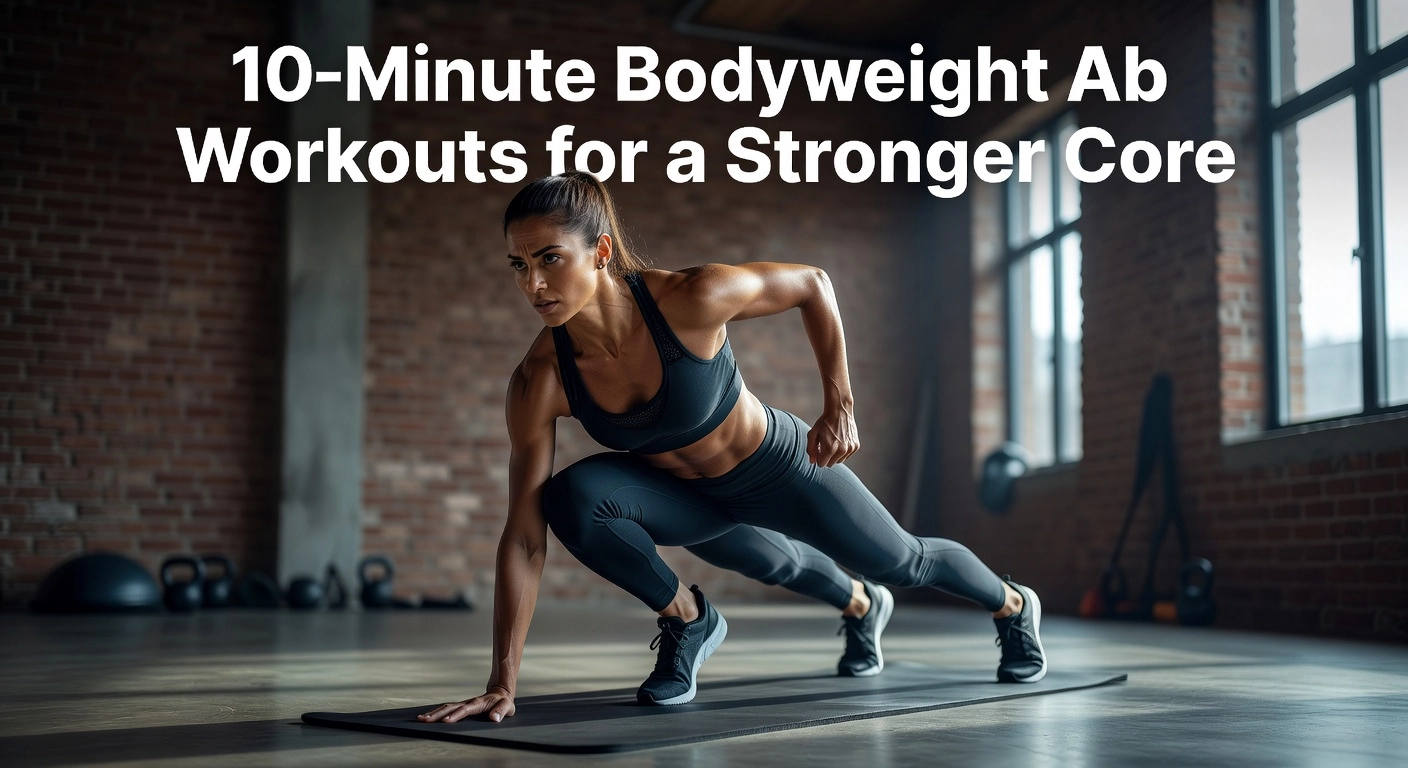
Hey, have you ever stared at your reflection and wished for a stronger core, but then reality hits? You’re swamped with work, kids, or just life, and the gym feels like a distant dream. What if I told you that you can sculpt those abs right at home in just 10 minutes a day, no equipment required?
That’s right, we’re talking about super effective ab workouts designed for beginners like you. These bodyweight routines target your entire core, from those deep stabilizers to the muscles that give you that toned look. No fancy gear, no hours wasted. Just simple moves you can crush anywhere, anytime.
In this post, you’ll discover five killer 10-minute ab workouts, complete with step-by-step instructions, beginner modifications, and pro tips to keep you safe and motivated. By the end, you’ll have the tools to build real core strength, boost your posture, and feel more confident in your daily moves. Ready to ditch the excuses and get started? Let’s make those abs pop!
Why Ab Workouts Matter in 2026
Hey there, if you’re just starting out with fitness, you might wonder why ab workouts are still buzzing in 2026. According to Treendly data, searches for ab workouts show a steady upward trend, even with the home fitness boom making bodyweight routines super accessible from your living room. People are ditching fancy gym gear for functional core strength that helps with everyday moves, like carrying groceries or playing with kids, all fueled by short TikTok challenges and AI apps ranking high in fitness trends.
The perks go way beyond a six-pack. Strong abs improve your posture so you stand taller without slouching, boost balance to prevent wobbly moments, cut injury risks especially for your back, and amp up athletic performance whether you’re running or lifting. Trainer surveys from Self.com reveal core training shows up in over 80% of functional fitness routines, proving it’s a must for real-life strength.
Ladies, these workouts shine for pelvic floor strengthening too, with safe bodyweight moves like planks and bird dogs that avoid prolapse risks, perfect alongside wellness services or one-on-one women’s personal training. Skip risky crunches; focus on deep core activation for better bladder control post-baby or during menopause.
Sure, diet drops body fat to 14-18% for women to reveal abs, but workouts first build that muscle thickness for powerhouse strength. Start simple at home, and you’ll feel the difference fast. Ready to dive in?
Key Core Muscles Ab Workouts Target
Hey, before we get into those bodyweight moves, let’s break down the key core muscles your ab workouts target. Knowing these helps you see why certain exercises feel so effective, especially as a beginner building a strong foundation.
Rectus Abdominis: Your Six-Pack Star
The rectus abdominis runs straight down the front of your torso, from ribs to pelvis, creating that classic six-pack look when your body fat drops. It shines in spinal flexion, pulling your ribcage toward your hips, like during a basic crunch. This muscle not only boosts aesthetics but also stabilizes your trunk for everyday moves like bending or standing tall. For beginners, focus on controlled reps to build thickness without strain. Pair it with diet for visibility, as women often need 14-18% body fat to see definition. Learn more about core muscles.
Obliques: Rotation and Side Stability Powerhouses
Your obliques, on the sides, include external layers for twisting your torso and internal ones for added support. They handle rotation, like swinging a golf club, and side bending to keep you stable during walks or sports. Strong obliques prevent swaying and cuts injury risk in uneven activities. Target them with twists to enhance balance.
Transverse Abdominis: The Deep Stabilizer Trending Now
Deepest of all, the transverse abdominis wraps like a corset around your midsection, firing for posture, anti-rotation, and spinal protection. It’s huge in 2026 functional training, emphasizing stability over flexing for better longevity and back pain relief. Activate it by drawing your belly button to spine during planks. Try TA-focused workouts.
A classic ACE study shows bicycle crunches spark 248% more muscle activation than traditional crunches, hitting rectus and obliques hard, while planks engage the full core, especially transverse for endurance. These bodyweight gems are perfect starters. Ready for the routine?
Prerequisites Before Starting
Hey, before we dive into those bodyweight ab workouts, let’s get you prepped safely, especially as a beginner. A quiet, distraction-free space helps you focus on form and breathing, perfect for home routines that build core strength without equipment. Grab an optional yoga mat for extra comfort; it cushions your back and knees during planks or bird dogs, reducing slippage on hard floors, as recommended by fitness experts.
Consult a Doctor First
If you’re postpartum, have a history of pelvic organ prolapse, or deal with back issues, chat with your doctor before starting. Core exercises can strain these areas if not modified, per Mayo Clinic guidelines. They might suggest pelvic floor checks to avoid injury.
Engage Your Pelvic Floor Properly
Draw your navel gently toward your spine using about 10% effort; this activates your deep transverse abdominis and pelvic floor like a supportive hammock. Practice lying down: exhale, hold 5-10 seconds, feel your sides tighten without arching your back. Do this before every move for stability.
Start Slow with Smart Breathing
Ease in 3 times a week with fewer reps, prioritizing form. Breathe deeply: inhale to expand your belly, exhale on the effort to manage pressure and protect your core, avoiding breath-holding that spikes strain. This beginner approach, backed by ACSM trends, sets you up for success without overwhelm.
Your 10-Minute Bodyweight Ab Routine
Hey, now that you’re prepped and know your core muscles, let’s jump into this super simple 10-minute bodyweight ab workout. It’s designed for busy beginners like you, focusing on full-core strength with no equipment needed. The structure is a quick circuit: pick 5 exercises, do 40 seconds of work followed by 20 seconds rest for each, then repeat for 3 rounds total. That adds up to about 10 minutes of pure core fire, aligning with 2026 trends where short HIIT circuits dominate home fitness, as 72% of people love their flexibility according to recent stats from fitness trend reports.
Quick Warm-Up (1 Minute)
Start with marching in place while bracing your core. Stand tall, lift knees high alternately, and draw your belly button toward your spine without holding your breath. This activates your deep transverse abdominis safely, prepping you for stability and cutting injury risk, which experts say drops 30-50% with regular core work per ACSM predictions. Do it steadily for one full minute to get blood flowing.
Your 5 Bodyweight Exercises
Go as AMRAP (As Many Reps As Possible) in the 40 seconds for intensity if you’re feeling strong, or stick to strict 10-15 reps per side as a beginner to nail form. Rest 30 seconds between rounds. Here’s the lineup, targeting rectus abdominis, obliques, and more:
- Bicycle Crunches: Lie back, hands behind head, alternate elbow to opposite knee while extending the other leg. This activates 248% more muscle than regular crunches per ACE studies.
- Mountain Climbers: From plank, drive knees to chest fast, hips low for cardio-core burn.
- Reverse Crunches: On back, knees bent, curl hips up toward chest without pulling your neck.
- Russian Twists: Seated, lean back slightly, rotate torso side to side with feet up or down.
- Side Plank Crunches: Forearm side plank, crunch top elbow to knee; switch halfway.
Cool-Down (30 Seconds)
Finish in child’s pose: kneel, sit hips to heels, arms forward, forehead down. This releases your back and hips gently.
Form over speed always, friend, breathe out on effort, and film yourself for quick feedback, it makes a huge difference. Hit this 3-5 times a week with good eats for real results!
Bird Dog
Hey, ready to try the Bird Dog? This bodyweight gem is perfect for beginners building core stability without any equipment, just a mat for comfort. Start on all fours in a tabletop position: hands under shoulders, knees under hips, and spine neutral. Picture pulling your belly button toward your spine to fire up your transverse abdominis, that deep core muscle for rock-solid stability.
Step-by-Step:
- Slowly extend your right arm forward to shoulder height and left leg back to hip level, keeping hips square and level, no wobbling.
- Hold for 3 seconds, breathing steadily, then lower with control.
- Alternate sides for 8-10 reps each; do 2-3 sets.
For super beginners, stay on your knees and just lift one limb at a time. It’s pelvic-floor safe, ideal for women postpartum or with sensitivity, activating stabilizers gently per experts at ACE Fitness. You’ll boost balance, posture, and low-back resilience, with studies showing 20-40% core endurance gains in weeks. Check form cues via Healthline. Feel that control grow? Next up, more moves to sculpt your abs!
Dead Bug
Hey, next up in your bodyweight ab workout is the Dead Bug, a fantastic move for beginners that zeroes in on your transverse abdominis, the deep core muscle acting like a natural corset for stability. Start by lying flat on your back on a mat, arms extended straight up toward the ceiling, and knees bent at 90 degrees with shins parallel to the floor, like a tabletop. Press your low back firmly into the floor to engage your core and protect your spine, then slowly lower your right arm overhead and left leg toward the ground, hovering just above without letting your back arch. Inhale to return to start, then switch to the left arm and right leg. Keep it controlled, taking 2-3 seconds each way, and alternate sides continuously for 40 seconds per set. Research from Harvard Health shows this isolates the TVA better than many Pilates exercises, building control to prevent back pain and boost posture.
If it’s too tough, modify by keeping feet flat on the floor: slide one heel out while extending the opposite arm. Aim for 3 sets with 20 seconds rest, perfect alongside sports massage for recovery. You’ll feel that deep burn improving balance for daily life or runs. Check Verywell Fit for form tweaks. This keeps things pelvic-floor safe, ideal for women starting out.
Forearm Plank
Hey, let’s tackle the Forearm Plank next in your bodyweight ab workout, a powerhouse move that’s super beginner-friendly and needs zero equipment, just a mat for comfort. Start face down on the floor, then come onto your forearms with elbows directly under your shoulders and forearms parallel, facing forward. Extend your legs back so you’re balanced on your toes, lifting your body into a straight line from head to heels, like a solid plank of wood. Squeeze your glutes tight and draw your core in by pulling your navel toward your spine to keep everything stable; this fires up your full core, including those deep transverse abdominis stabilizers that boost posture and prevent slouching from desk life.
Hold for 40 seconds if you can, or build up from 20 seconds with 2-3 sets, breathing steadily, not holding your breath. If it’s too tough, drop to your knees for support while keeping your upper body straight. A top cue: don’t let your hips sag (which strains your low back) or pike up high (which cheats the core work); check your alignment in a mirror. Research from Verywell Fit shows planks activate deep stabilizers twice as much as crunches, leading to better balance and injury prevention, especially for women focusing on pelvic-safe strength. You’ll feel your posture improve after just a week of consistency, setting you up perfectly for the next moves.
Bicycle Crunches
Hey, let’s pedal into Bicycle Crunches, a killer bodyweight move that’s perfect for beginners targeting your obliques and rectus abdominis in this ab workout. According to the ACE study, it activates 248% more rectus abdominis muscle than traditional crunches, making it a top pick for building that deep core strength and waist definition without any equipment.
How to Do It Step-by-Step:
- Lie flat on your back with knees bent at 90 degrees in a tabletop position, feet off the ground. Place hands lightly behind your head, elbows flared wide.
- Exhale and twist your torso to bring your right elbow toward your left knee, while straightening and hovering your right leg a few inches off the floor.
- Inhale, then switch: left elbow to right knee, extending the left leg. Pedal rapidly but controlled for 40 seconds per set.
- Keep your lower back pressed down and gaze at the ceiling to protect your neck, never pulling on it.
This move boosts stability for everyday activities and sports. Do 3 sets, resting 20 seconds between. Feel that burn? You’re sculpting a stronger core, just like in our private one-on-one sessions. Next up, keep the momentum going!
Mountain Climbers
Hey, ready to amp up your ab workout with Mountain Climbers? This bodyweight powerhouse starts in a high plank position: hands under shoulders, arms straight, body in a straight line from head to heels, core engaged, and glutes squeezed for stability. From there, drive one knee toward your chest like you’re running in place, then quickly alternate legs in a rapid motion. Go for 40 seconds at a fast pace to spike your heart rate, but keep your core tight by drawing your navel to your spine, preventing any hip rotation or sagging that could throw off form.
This move adds a cardio kick, burning around 10-15 calories per minute while targeting fat around your midsection through HIIT-style intensity, which research shows trims visceral fat better than steady cardio. Beginners, modify by slowing down or stepping one foot at a time instead of hopping, building control without overwhelm. To protect your low back, fully engage your abs and glutes throughout, creating a natural brace that stabilizes your spine; poor form like arched hips strains it, so focus on neutral alignment. Do 3 sets with short rests, and you’ll feel your entire core firing for better posture and endurance. Perfect for slipping into your 10-minute routine next to planks or bird dogs.
Pro Tips for Better Results
Hey, now that you’ve nailed those bodyweight moves like Bird Dogs and Bicycle Crunches, let’s supercharge your ab workouts with these beginner-friendly pro tips. They’ll help you build a stronger core safely while avoiding common pitfalls.
Breathe Right to Protect Your Pelvic Floor
Start by exhaling on the effort, like when you crunch up or lift your legs, and inhaling on the easy release. This syncs your diaphragm with your deep core and pelvic floor, keeping everything stable without strain. Never hold your breath, as it spikes pressure and risks issues like prolapse, especially for women. Practice 360-degree breathing: expand your belly and ribs on the inhale, then gently engage on the exhale. In planks, steady breaths let you hold longer, say from 20 to 60 seconds over weeks. You’ll feel more control right away.
Pair with Walking or Calisthenics 3x Weekly
Don’t isolate abs; combine 2-3 core sessions with 20-30 minute walks on off days or full-body calisthenics circuits three times a week. Add push-ups, squats, and lunges for balance, boosting metabolism and posture. This functional approach, big in 2026 trends, prevents imbalances and yields 15-25% strength gains in a month for beginners.
Track Your Wins Weekly
Log hold times, like plank progress from 20 to 45 seconds, or reps in Mountain Climbers. Note weekly in a notebook or app, plus waist measurements. Beginners see 20-50% improvements in 28 days; adjust by adding variations like side planks.
Fuel Up for Recovery and Definition
Aim for 1.6-2.2g protein per kg bodyweight daily, around 100-150g from eggs, yogurt, or chicken, split into meals. Post-workout protein plus carbs speeds recovery by 20-30%. For visible abs, women need 16-20% body fat via a 300-500 calorie deficit; abs build thickness, diet reveals them.
Join The McLeod Method’s Free 28-Day Plan
Plug these into The McLeod Method’s free 28-day calisthenics plan for variety, with core on Day 3 plus circuits. It’s joint-friendly, no-equipment, and perfect for women’s training, delivering real results fast.
Common Mistakes to Avoid
Hey, now that you’ve got those bodyweight ab workouts down like Bird Dogs and Bicycle Crunches, let’s dodge some pitfalls beginners often hit. Poor form can turn gains into strains, so keep these in mind for safer, stronger results.
Pulling on Your Neck
Yanking your head forward during crunches strains your neck muscles and spine. Instead, lightly cup your hands behind your ears or across your chest for gentle support. Lead with your shoulders, keep your chin tucked slightly, and gaze upward. This keeps focus on your abs, not your neck.
Swinging with Momentum
Jerking through reps uses hips instead of abs, risking back tweaks. Go slow: 2-3 seconds up, pause, then lower controlled. Quality beats speed for real core burn.
Arching Your Low Back
Lifting your lower back off the floor overloads it; brace your core first by drawing your belly button in. Press your back flat and maintain neutral spine. If it arches, regress to Dead Bugs.
Overdoing Crunches
Crunches hit just the front abs; the ACE study shows Bicycle Crunches activate 248% more muscle overall. Vary with planks and twists 2-3 times weekly for balanced strength.
Skipping Recovery
Abs need rest too; wait 48 hours between sessions to repair. Train 2-3 days a week, listen to soreness, and pair with good sleep for progress. Your core will thank you!
Progressing Your Core Training
Hey, now that you’ve nailed the basics like forearm planks and bird dogs in your 10-minute bodyweight routine, it’s time to progress your core training safely and effectively. Stick with consistency, and by week 2 or later, increase holds to 45-60 seconds per exercise or add rounds to build endurance. For instance, extend your forearm plank from 30 seconds to 45, then 60, across 3-4 rounds with 30-60 seconds rest; this aligns with NASM’s stabilization phase, yielding up to 92% endurance gains in just weeks, per Les Mills research. Listen to your body, reassess form weekly with tests like double-leg lowers, and train 2-5 times weekly to avoid burnout.
Try These Variations if You’re Ready
Once basics feel solid, swap in side planks (20-60 seconds per side, progressing to leg lifts) for obliques or hanging leg raises (knees to chest for starters) to hit lower abs and grip strength. These bodyweight gems add rotation and stability without equipment.
For tailored plans that scale perfectly, join The McLeod Method one-on-one training or private gym sessions, focusing on women’s personal training with form checks and habit-building.
Boost Recovery and Safety
Pair your ab workouts with sports massage to enhance circulation, reduce spasms, and prevent low back strains; it’s a game-changer for injury-proofing.
Finally, build to daily low-volume (5-10 minutes of varied moves like dead bugs), safe for women per Peloton insights, as cores recover fast when not overdone. Track progress with a journal for visible strength gains.
Actionable Takeaways to Build Your Core
Hey, now that you’ve mastered those bodyweight moves like Bird Dogs, Dead Bugs, and Bicycle Crunches in your 10-minute routine, let’s turn them into lasting habits with these actionable takeaways. First, hit this ab workout 3-4 times weekly for 4 weeks straight; that’s just 30-40 minutes total, perfect for beginners. Pair it with 20-30 minutes of daily cardio, like brisk walking, and a simple diet tweak: swap sugary snacks for veggies and lean proteins to reveal that core strength. Studies show Bicycle Crunches activate 248% more muscle than basic crunches, so consistency amplifies results fast.
Track success by strength gains, not the scale, like holding a Forearm Plank 20 seconds longer after two weeks; this builds the transverse abdominis for better posture and balance. Download The McLeod Method home workout plan today for seamless full-body integration with your ab sessions. Ready for more? Book a private one-on-one session for expert form checks, custom progressions, and women’s personal training tailored to you. Stay consistent, and watch your strong core transform posture, skyrocket confidence, and elevate overall wellness, just like our clients who report feeling unstoppable after a month.
Conclusion
There you have it: five game-changing 10-minute bodyweight ab workouts that deliver real core strength without any equipment or gym membership. These beginner-friendly routines target your entire core, from deep stabilizers to surface muscles, with step-by-step instructions, modifications, and pro tips for safe, effective training. You’ll improve posture, enhance daily performance, and build the confidence that comes from consistent progress.
The true value lies in their simplicity. They fit seamlessly into your busy life and eliminate excuses forever. Your call to action is straightforward: choose one workout today, set a timer for 10 minutes, and commit to it daily. Track your gains over the next week. Imagine the stronger, more capable you just 10 minutes away. Start now, stay consistent, and watch your core transform. You’ve got this!
1 thought on “10-Minute Bodyweight Ab Workouts for a Stronger Core”