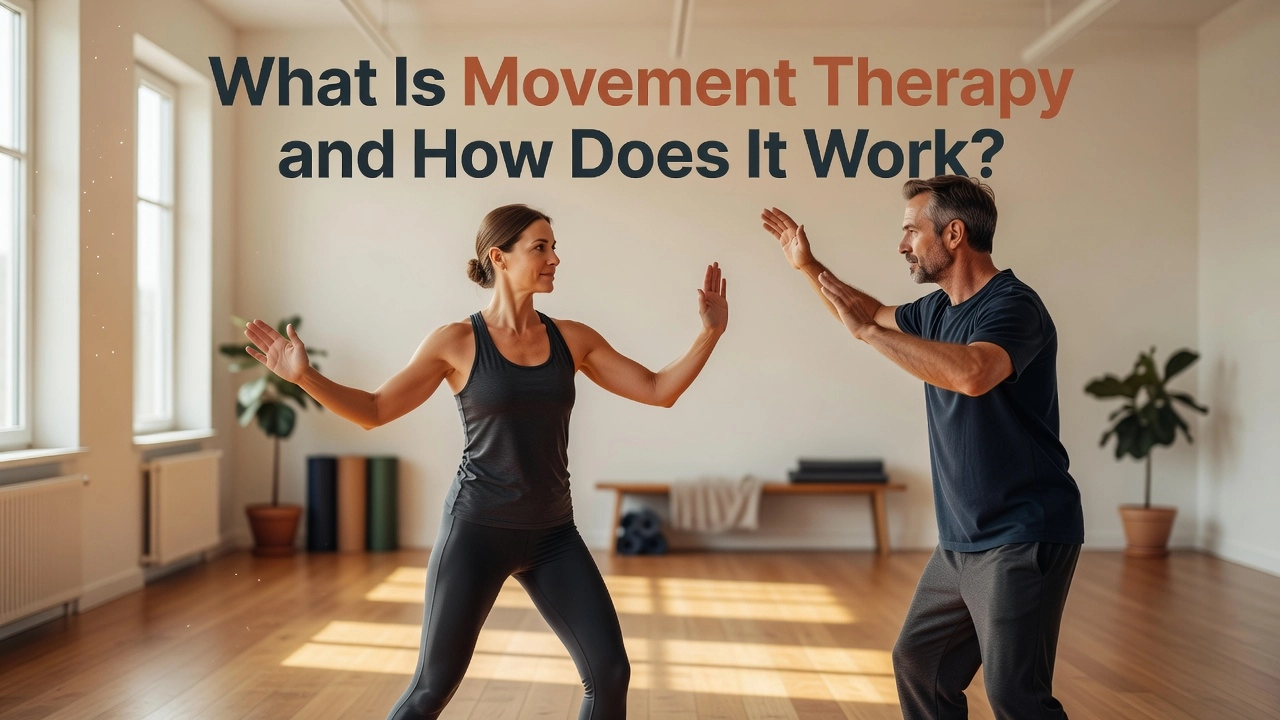
Your body holds more wisdom than you might realize, and sometimes the most powerful path to healing runs not through words, but through movement. Whether you are managing stress, recovering from trauma, or simply searching for a deeper connection between your mind and body, movement therapy offers a proven, structured approach to wellness that anyone can explore.
Movement therapy is a broad and fascinating field that uses intentional physical activity to support emotional, mental, and physical health. It has been practiced in various forms for decades, drawing from psychology, dance, somatic work, and rehabilitative medicine to create a truly holistic healing experience.
In this guide, you will learn exactly what movement therapy is, how it works on a practical level, and what types of movement therapy exist today. You will also discover who can benefit from it and what to expect if you decide to try it for yourself. No prior experience or background in therapy is required. By the end, you will have a clear, confident understanding of this transformative approach to health and well-being.
Defining Movement Therapy: Beyond the Clinical Definition
Movement therapy is a broad umbrella term that encompasses a wide range of body-based practices, and understanding its full scope is essential before exploring how it applies to your training and recovery. At one end of the spectrum sits dance/movement therapy (DMT), formally defined by the American Dance Therapy Association as the psychotherapeutic use of movement to promote emotional, social, cognitive, and physical integration. DMT primarily serves psychological and emotional healing, using movement as a language to process trauma, regulate mood, and support mental health outcomes.
At the other end sits functional and rehabilitative movement therapy, the branch most relevant to active individuals, athletes, and anyone navigating post-injury recovery. This performance-oriented approach focuses on biomechanical assessment, correcting movement dysfunctions, restoring mobility and strength, and building the physical resilience needed for real-world demands. As explained by Progressive Mobility PT on functional movement therapy, this model bridges the gap between clinical rehabilitation and peak physical performance, making it far more than a standard exercise program.
The growing mainstream interest in these modalities is reflected in hard market data. The global somatic therapy market, which includes movement-based and body-centered approaches, is projected to grow from USD 4.72 billion in 2026 to USD 12.55 billion by 2033, at a compound annual growth rate of 17.7%. This signals a significant cultural shift toward recognising body-based interventions as credible, evidence-informed tools for health and recovery.
A foundational principle uniting all branches of movement therapy is this: movement is simultaneously a diagnostic tool and a therapeutic intervention, not merely exercise. How you move reveals compensations, asymmetries, and restrictions that speak directly to underlying physical or neurological issues. Intentional, planned movement then becomes the means of resolving those issues at their root.
This is precisely where the McLeod Method operates. It bridges physical rehabilitation, sports recovery, and holistic wellness through meticulous, individually tailored movement work, integrated with sports massage, nutrition, and recovery support to deliver outcomes that no single modality could achieve alone.
The Core Principles That Make Movement Therapy Effective
Effective movement therapy is built on a foundation of principles that distinguish it from generic exercise or passive treatment. Understanding these principles helps you appreciate why this approach produces results that other modalities often cannot.
Movement as Assessment First
Before any intervention begins, a skilled practitioner reads the body’s story through observation. Compensatory patterns, such as an exaggerated forward lean during a squat or asymmetrical weight distribution while walking, reveal how the nervous system has adapted to past injury, pain, or prolonged postural stress. These adaptations may have started as protective responses, but over time they become the body’s default programming, creating new problems downstream. Tools like the Functional Movement Screen) evaluate fundamental movement patterns to identify imbalances in mobility and stability before a single corrective exercise is prescribed. This assessment-first approach ensures every intervention is targeted, not generic.
How the Body Physically Rewires Itself
Chronic stress, old injuries, and sedentary habits do not simply affect how you feel; they restructure how you move at a neurological level. Prolonged desk work, for example, reinforces shortened hip flexors, inhibited glutes, and a forward head position until these patterns feel completely natural. A past ankle sprain can create persistent asymmetrical loading years after the tissue has healed. Research confirms that emotional and psychological stress also manifests physically, altering breathing patterns, increasing baseline muscle tension, and restricting expressive movement range.
Retraining the Brain, Not Just the Body
This is where movement therapy separates itself from symptomatic approaches. Reducing pain through temporary measures does not correct the faulty motor programs driving that pain. Neuroplasticity, the brain’s capacity to reorganize neural pathways throughout life, means lasting functional improvement requires consistent, intentional motor re-education. The brain must form new movement habits through repetition and progressive challenge, not simply receive passive treatment.
Root Cause Over Symptom Relief
Symptomatic relief addresses the surface. Root-cause correction restores the underlying movement quality that created the symptom in the first place. Low back pain, for instance, is frequently a consequence of restricted hip mobility or thoracic stiffness rather than a problem originating in the lumbar spine itself. Treating only the painful site provides temporary comfort; restoring full functional movement patterns creates durable change.
Movement therapy also recognizes that physical, cognitive, and emotional dimensions are inseparable. How someone inhabits their body, their proprioceptive awareness, their relationship with movement, and their stress response all influence functional outcomes. Addressing the whole person is not a philosophical stance; it is simply accurate physiology.
Movement Therapy vs. Physical Therapy vs. Massage: What Is the Difference?
Three distinct modalities often appear in the same conversation around pain, recovery, and performance, yet each serves a fundamentally different purpose. Understanding where they diverge, and where they overlap, helps you make smarter decisions about your own care and long-term wellbeing.
Physical therapy is a licensed, clinically supervised practice focused on diagnosing movement disorders and rehabilitating acute injuries, post-surgical conditions, and neurological impairments. A physical therapist creates a structured, goal-oriented treatment plan with a defined endpoint: once you reach independence in daily function or hit the ceiling of what the clinical model can address, you are discharged. The process is evidence-based and medically grounded, making it the appropriate first response to significant injury. However, the clinical model is built around resolving the presenting problem, not necessarily the movement history that preceded it. As research on physical therapy vs. massage therapy highlights, PT excels at structured rehabilitation but operates within a time-limited framework that rarely extends to long-term movement re-education.
Massage therapy works through direct manual manipulation of soft tissue, including muscle, fascia, and connective tissue. Its primary strengths are reducing tension, improving circulation, promoting recovery, and alleviating stress-related discomfort. These outcomes are genuinely valuable, particularly as part of an ongoing recovery or performance support strategy. What massage does not do is systematically assess or retrain the dysfunctional movement patterns, compensatory postures, or neuromuscular habits that contribute to recurring pain or reduced performance. It treats the tissue; it does not re-educate the system.
Movement therapy occupies the space those two modalities leave open. It begins where formal PT ends, using intentional movement, somatic awareness, and progressive functional re-education to address the underlying habits that clinical rehab rarely reaches. This is precisely why so many people plateau after PT discharge. The injury resolves, but the compensatory patterns, the altered gait, the guarded postures, the imbalanced recruitment strategies, remain intact and often become the foundation for the next problem.
When these three approaches are integrated deliberately rather than used in isolation, they form a genuine continuum of care. PT stabilises and rehabilitates. Massage supports soft-tissue recovery and reduces tension throughout the process. Movement therapy then extends and deepens those gains by rebuilding how you actually move through daily life and training. Each modality has its role; the real value emerges when they are sequenced and combined with intention rather than treated as interchangeable options.
What Movement Therapy Actually Looks Like in a Session
Understanding movement therapy in theory is one thing. Seeing how it unfolds in practice is where the real clarity comes from.
A Structured Session From Start to Finish
Every session in a private gym setting follows a deliberate progression, and that structure is what separates movement therapy from casual exercise. It begins with a movement screen or check-in, a brief but important process where the practitioner assesses how you are moving that day, identifies any new restrictions or pain patterns, and confirms where the session needs to focus. This might involve observing a squat, testing hip mobility, or simply asking targeted questions about how your body has responded since the last session. From there, the work moves into targeted mobility and motor control drills, addressing the specific restrictions the screen revealed. Quality of movement takes absolute priority over repetition or load at this stage. Once mobility and control have been established, the session progresses into loaded or functional movement integration, where corrective patterns are reinforced under real demand, such as a deadhinge, a split stance press, or a loaded carry. The session closes with a structured cool-down using breathwork, gentle mobility, or soft tissue techniques to support parasympathetic recovery and lock in the session’s gains.
Sports Massage as an Integrated Tool, Not an Add-On
Sports massage within this model is woven directly into the session rather than offered as a separate treatment. When a movement screen reveals that restricted hip flexor tissue or thoracic stiffness is preventing a client from accessing the range of motion they need, targeted massage work addresses that tissue limitation immediately. The critical difference is sequencing: massage prepares the tissue, and active movement follows to reinforce the new length and control. This approach means the body learns to use its restored range rather than simply relaxing back into old patterns once the session ends. Research consistently supports this kind of integrated corrective strategy for breaking compensation cycles.
Nutrition as a Non-Negotiable Foundation
Nutrition shapes how well the body responds to every session. Adequate protein supports the tissue repair that movement therapy demands, particularly when retraining injured or chronically overloaded structures. Anti-inflammatory eating, centred on whole foods, omega-3 fatty acids, and antioxidant-rich vegetables, reduces the systemic inflammation that quietly limits mobility gains and prolongs recovery between sessions. Balanced macronutrients also sustain the focused mental energy required for neuromuscular learning, because building new movement patterns is a cognitive and physical process simultaneously. Nutritional guidance is therefore built into the overall plan, not referenced as an afterthought.
Why One-on-One Precision Changes Everything
Group settings make consistent progression structurally impossible because no two clients present identically, and those differences matter enormously over time. In a private environment, every session is observed in full detail, allowing the practitioner to catch subtle compensations before they become injuries, adjust loading or exercise selection in real time, and plan the following session with accurate information. This level of meticulous individual planning is what produces compounding results rather than stalled progress.
The Pain Points This Approach Is Built to Solve
In practice, movement therapy consistently addresses four patterns that clients arrive with most frequently. Post-injury performance plateaus occur when rehabilitation has resolved acute pain but inefficient movement patterns remain, preventing a return to full capacity. Mobility regression from prolonged desk work or repetitive sport demands creates tightness and imbalance that gradually compounds into dysfunction. Chronic low-grade pain, the kind that never fully resolves, almost always traces back to underlying movement dysfunction rather than tissue damage alone. Finally, recurring compensatory injuries follow a predictable cycle until the kinetic chain imbalances driving them are identified and corrected. Movement therapy, delivered in a structured, integrated, one-on-one format, targets the root of each of these issues rather than managing the symptoms.
Who Benefits Most from Movement Therapy
Movement therapy is not a one-size-fits-all modality reserved for a specific type of person or condition. Its principles apply across a remarkably wide spectrum of needs, backgrounds, and goals. That said, certain groups tend to experience the most profound and immediate results.
Post-Rehab Clients Still Feeling the Gap
One of the most underserved populations in the wellness space is people who have completed formal physical therapy but still feel stuck. They have been discharged, told they are technically healed, yet they move with hesitation, avoid certain positions, or cannot return to the activities they love. This gap between clinical discharge and full functional recovery is precisely where movement therapy excels. It rebuilds neuromuscular confidence, addresses lingering compensatory patterns, and progressively reintroduces the demands of real life and sport. Research on post-rehab athletes consistently highlights this transition as a critical window where targeted movement work prevents regression and accelerates return to performance.
Performance Athletes Investing in Longevity
Athletes who want to compete longer and recover faster are increasingly turning to movement therapy as a proactive tool rather than a reactive one. Recurring injuries almost always have a movement quality component; correcting those patterns reduces reinjury risk while simultaneously improving biomechanical efficiency. Even small refinements in how an athlete loads a joint or transfers force can yield measurable performance gains over time.
Desk-Bound Professionals and Active Individuals
Years of sedentary postures create predictable dysfunction, tight hip flexors, forward head carriage, and chronic lower back load. Movement therapy directly addresses these patterns through deliberate re-education rather than temporary symptom relief. Similarly, active individuals who train consistently but hit persistent plateaus often discover that movement quality, not volume, is the limiting factor.
Those Managing Chronic Pain
For anyone seeking body-based approaches to chronic pain that address root causes rather than masking discomfort, movement therapy offers a structured, evidence-informed path forward. It restores function, builds resilience, and empowers individuals to actively participate in their own recovery rather than remain passive recipients of treatment.
How to Know If Movement Therapy Is Right for You
Deciding whether to pursue movement therapy comes down to recognising patterns that standard approaches have consistently failed to resolve. The following indicators are not about catastrophising minor discomfort. They are honest signals that your body is asking for a different kind of attention.
You completed a formal rehab program but still feel guarded, limited, or not quite yourself weeks later. This is one of the most common and least-discussed gaps in recovery. Clinical rehab addresses tissue healing and basic function, but it rarely has the time or scope to retrain the protective movement habits your nervous system developed during injury. If you are modifying how you squat, hesitating under load, or simply not moving with the confidence you had before, that is not a fitness problem. It is a movement re-education problem.
The same injury or pain pattern keeps returning despite rest, stretching, or conventional gym training. Recurring issues are rarely about bad luck. They typically point to an unresolved biomechanical pattern, a compensation strategy that has become habitual, or a loading issue that has never been formally examined. Rest quiets symptoms temporarily. Movement therapy addresses why the pattern exists in the first place.
You notice asymmetries in how your body moves or loads but have never had them assessed. Some asymmetry is normal. Significant, unaddressed differences in how your left and right sides recruit, stabilise, or absorb force are a meaningful injury risk factor that most training programmes simply overlook.
Your performance has plateaued and effort alone is not the answer. When training consistency and intensity are both adequate yet progress stalls, the limiter is often a subtle movement inefficiency that no amount of additional volume will fix.
You want someone who reads where you are on a given day and adapts accordingly. If that description resonates, integrated movement therapy delivered in a private, one-on-one setting is worth exploring seriously.
What to Look for in a Movement Therapy Specialist
Not every practitioner who incorporates movement into their work delivers genuine movement therapy. Knowing what to look for protects you from wasted time and ensures the investment you make in your body actually produces results.
Session Planning Built Around You
The first quality to look for is meticulous, individualised session planning. Every session should be purposefully designed around your movement history, your current physical status, and your specific goals. Generic, templated programmes are a significant red flag. A skilled specialist begins with a thorough assessment of how you actually move, identifies where compensations exist, and builds a progression that responds to your feedback session by session. If your programme looks identical to someone else’s, that is a strong indicator that observation and genuine personalisation are absent.
A Multi-Modality Approach
Effective movement therapy practitioners draw on a range of tools rather than defaulting to a single method. Look for someone who integrates manual techniques, targeted mobility work, progressive strength work, and recovery-based strategies within the same programme. Each modality addresses a different dimension of your movement health, and relying exclusively on one approach limits outcomes. A practitioner who works across these layers demonstrates a deeper understanding of how the body functions as an integrated system. You can explore what qualified movement therapy professionals deliver through resources like the APOS Society’s career and practice guidance.
Environment, Communication, and Whole-Life Integration
The setting matters more than most people realise. In group or high-volume environments, individual movement simply cannot be monitored closely enough to deliver meaningful correction or safe progression. A private or semi-private setting allows the specialist to observe subtle compensations in real time and intervene precisely.
Beyond the environment, prioritise clear communication. You should leave every session understanding the reasoning behind what you did, not simply following instructions. A practitioner who explains why a specific drill addresses your hip rotation deficit, or why a particular loading pattern is sequenced before another, is building your long-term self-awareness rather than creating dependence.
Finally, the best movement therapy does not operate in isolation from the rest of your life. Sleep quality, nutritional support, stress load, and recovery all directly influence how your body responds to movement work. Practitioners who acknowledge and address these factors, rather than treating movement as a standalone intervention, consistently produce more durable results. For guidance on finding credentialed specialists who work within this broader framework, the ADTA specialist directory is a useful starting point.
Bringing It All Together: Movement as Medicine
Movement therapy is not a niche clinical tool reserved for specific diagnoses or specialist settings. It is the practical bridge between recovering from what went wrong and performing at your genuine best. Everything covered in this guide points to one central truth: sustainable function requires more than fixing an acute problem. It requires rebuilding the movement foundation that supports everything you do.
The three-way distinction is worth holding onto. Physical therapy addresses the acute problem, restoring basic capacity and managing pain after injury or illness. Massage supports tissue health, improving circulation, reducing tightness, and aiding recovery between sessions. Movement therapy builds the lasting foundation by retraining patterns, correcting imbalances, and progressively developing the strength and coordination that make results stick.
Your immediate action step is straightforward. Return to the self-check indicators from the previous section and identify one pain point to address first, whether that is hip mobility, shoulder stability, or basic single-leg balance. Start there rather than attempting to fix everything at once.
When you are ready to work with a specialist, prioritise someone who operates in a genuinely individualized, integrated way. Generic protocols produce generic outcomes.
If meticulous, one-on-one movement therapy integrated with sports massage and nutrition sounds like exactly what has been missing, explore what working with the McLeod Method looks like.
Conclusion
Movement therapy is a powerful, accessible approach to healing that honors the deep connection between your body and mind. To recap the key takeaways: movement therapy uses intentional physical activity to support emotional and mental wellness; it draws from multiple disciplines including psychology, dance, and somatic work; it benefits a wide range of people regardless of age or fitness level; and you do not need any prior experience to get started.
Your healing journey does not have to begin with words. Sometimes it begins with a single step, a breath, or a stretch.
If you feel called to explore this path, start small. Research a local movement therapist, try a somatic awareness exercise at home, or simply tune into how your body feels right now. The wisdom you need is already within you. Movement therapy simply helps you listen.