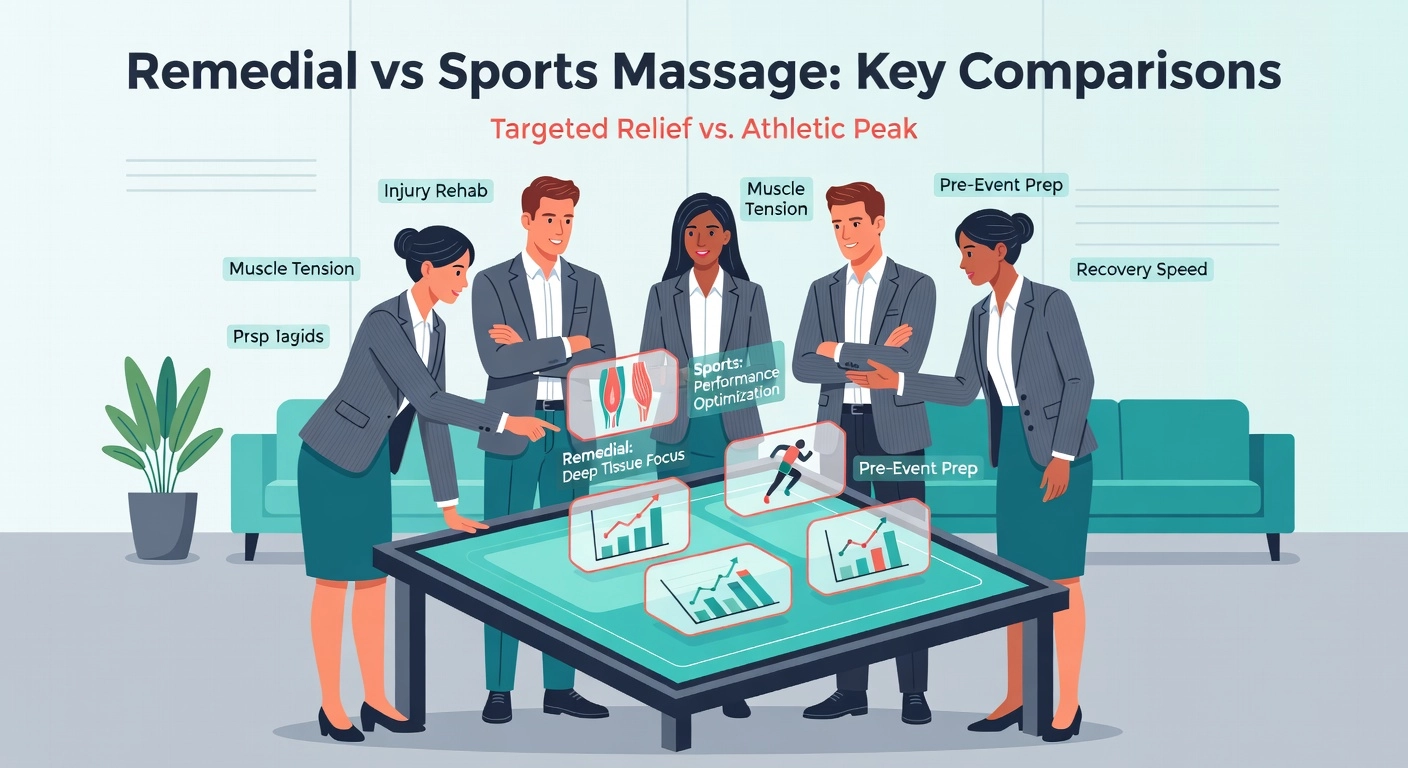
Whether you are an avid athlete pushing your limits or someone managing persistent muscle tension from daily life, choosing the right massage can transform your recovery and well-being. Yet, many confuse remedial massage with sports massage, leading to suboptimal results. Understanding their differences is essential for targeted relief.
Enter simply therapeutic remedial massage, a specialized approach focused on addressing chronic injuries, postural imbalances, and deep-seated pain through precise, diagnostic techniques. In contrast, sports massage prioritizes performance enhancement, injury prevention, and rapid recovery for active individuals. This comparison demystifies both modalities, highlighting their techniques, benefits, ideal candidates, and when to choose one over the other.
In this post, you will gain authoritative insights into their core methodologies, session structures, expected outcomes, and practical applications. Armed with this knowledge, you can make informed decisions to optimize your therapeutic journey, whether rehabilitating an old injury or fine-tuning athletic performance. Discover the nuances that set them apart and elevate your massage experience today.
What is Therapeutic Remedial Massage?
Therapeutic remedial massage is a targeted, assessment-driven therapy designed to address musculoskeletal pain, injuries, and tension. Therapists begin with a thorough evaluation of muscles, tendons, ligaments, and fascia to pinpoint dysfunctions, then apply precise techniques such as trigger point release, which applies sustained pressure to deactivate hyperirritable spots causing referred pain, and myofascial release to unwind restrictive connective tissues. These methods restore function, reduce inflammation, and promote healing, making it far more clinical than general massage. For instance, AIAM’s guide on remedial massage emphasizes its evidence-based approach for long-term relief.
Unlike relaxation massage, which uses light strokes for stress reduction and improved circulation, therapeutic remedial massage focuses on repairing damage from chronic conditions like fibromyalgia, aiding post-injury rehabilitation by enhancing mobility alongside physiotherapy, and correcting postural imbalances from poor ergonomics. It treats issues such as neck and shoulder tension from prolonged desk work or training imbalances in bodyweight exercises and personal training routines, releasing adhesions to boost circulation and prevent recurrence. In Australia, 18% of adults report lifetime use, with women twice as likely to seek it for pain management, per AAMT data and Gitnux statistics.
The global market underscores this demand, growing from $66.3 billion in 2022 to about $90 billion by 2026 at an 8% CAGR, reflecting rising interest in non-invasive wellness integrated with sports recovery and private sessions. Clients benefit from personalized plans that complement one-on-one training for optimal performance.
Understanding Sports Massage Therapy
Sports massage therapy stands as a performance-driven modality within simply therapeutic remedial massage, harnessing deep tissue manipulation, assisted stretching, and trigger point therapy to accelerate recovery and thwart injuries. These techniques target overworked muscles, boosting circulation, dismantling adhesions, and expelling lactic acid buildup for faster tissue repair. Athletes experience reduced DOMS, heightened flexibility, and sustained joint integrity, making it indispensable for intermediate fitness levels. For instance, in bodyweight training regimens, it counters repetitive strain from circuits like pistol squats or pull-ups.
Pre- and Post-Event Applications
Pre-event sessions, 24-48 hours prior, employ light effleurage and tapotement to prime muscles, enhancing power output by 10-20% per studies on runners and swimmers (sports massage treatments). Post-event care, within hours, prioritizes trigger points and lymphatic drainage to slash inflammation and recovery time by up to 30%. Integrate bi-weekly with bodyweight cycles at The McLeod Method’s private gym sessions for optimal periodization.
Overlapping seamlessly with remedial massage, sports variants apply identical deep methods for precise release in 60-minute one-on-one formats, ideal for women’s or men’s personal training clients rehabbing tweaks. 2026 trends spotlight preventative recovery, with regulars cutting injury risk 20-50% and aligning with longevity via wearables tracking HRV. The physiotherapy market, including these services, hits $79.34B by 2031 (CAGR 5.3%), validating efficacy for wellness-focused enthusiasts (physiotherapy market projection). Book now for sustained gains.
Core Similarities in Techniques and Goals
Shared Techniques: Deep Tissue, Trigger Point, and Myofascial Release
Therapeutic remedial massage and sports massage both rely on deep tissue manipulation to target deeper muscle layers, breaking down adhesions from overuse or poor posture common in active individuals. Trigger point therapy applies sustained pressure to deactivate hyperirritable knots, alleviating referred pain in areas like the shoulders or lower back during personal training routines. Myofascial release employs gentle, prolonged stretching to unwind fascial restrictions, enhancing tissue mobility and addressing imbalances that hinder bodyweight exercises such as squats or planks. These techniques directly combat muscle pain and dysfunction, making them essential for intermediate trainees progressing in one-on-one sessions. For instance, a client with chronic tension from women’s personal training can experience immediate relief, setting the stage for better performance. Comparing remedial and standard massage.
Aligned Goals for Circulation, Inflammation, and Mobility
Both modalities share goals of boosting circulation to deliver nutrients and oxygen to fatigued muscles, crucial for recovery after private gym sessions. They reduce inflammation through lymphatic drainage and friction methods, minimizing swelling from sports activities or daily stressors. Restoring range of motion via integrated stretching supports active lifestyles, preventing injuries in bodyweight training enthusiasts. This alignment promotes holistic wellness, with improved flexibility aiding precise form in men’s or women’s personal training. Outcomes include enhanced posture and endurance, ideal for those balancing fitness with demanding schedules.
Low-competition SEO data underscores their appeal: “remedial massage” garners 390-880 monthly Australian searches, while “therapeutic massage” reaches 18,100, offering prime visibility for bundled wellness services.
Bundling for Intermediate Trainees and Optimal Frequency
Intermediate users benefit from pairing these massages with bodyweight sessions, resolving training-induced tension for faster recovery and reduced DOMS. Industry evidence supports weekly sessions for chronic issues over 4-6 weeks, transitioning to bi-weekly maintenance to amplify results in both therapies. This frequency builds cumulative benefits like sustained mobility, perfectly complementing sports massage in private one-on-one training. Remedial massage techniques. Clients report 95% health improvements, aligning with global trends toward preventative recovery. Difference between massage types.
Key Differences: Remedial vs Sports Focus
Remedial massage prioritizes a clinical assessment to treat specific injuries and dysfunctions, such as biomechanical rehabilitation for lower back pain from prolonged desk work or repetitive strain injuries. Therapists perform detailed evaluations of posture, range of motion, and muscle imbalances before applying targeted techniques like trigger point release and myofascial therapy to restore function and alleviate chronic pain. In contrast, sports massage focuses on event-timed recovery and performance enhancement, such as pre-competition warm-ups to increase blood flow or post-event sessions to flush lactic acid and reduce delayed onset muscle soreness in runners or weightlifters. This distinction makes remedial ideal for long-term rehabilitation, while sports massage supports dynamic athletic demands with techniques integrated into training cycles.
Each approach offers unique pros and cons tailored to client needs. Remedial massage excels in detailed pathology treatment, providing measurable pain relief and healing for conditions like tendonitis or postural imbalances, often showing improvements after 1-3 sessions according to Australian therapist guidelines. However, it may feel less dynamic for athletes requiring rapid integration with high-intensity workouts. Sports massage shines in seamless training alignment, boosting flexibility, preventing overuse injuries, and enhancing mental focus, with studies indicating up to 20% faster recovery times for active individuals. Its drawback lies in a broader maintenance focus, potentially missing hyper-specific non-athletic pathologies. For intermediate clients, blending elements yields optimal results, aligning with trends toward preventative recovery where women, who access services at twice the rate of men, seek holistic support.
Comparison Table
| Aspect | Remedial Massage | Sports Massage |
|---|---|---|
| Duration | 60 minutes for thorough assessment | 60 minutes for efficient recovery |
| Intensity | Deep, sustained pressure on trigger points | Deep, dynamic with stretching integration |
| Ideal Frequency | Bi-weekly for chronic rehab progression | Event-based or weekly during training peaks |
The McLeod Method’s private gym model differentiates by positioning sports massage as a remedial equivalent for Canberra and Sunshine Coast clients. Originating from a 2016 Canberra home gym, it delivers bespoke 60-minute sessions in private settings, bundling sports massage with bodyweight training, women’s and men’s personal training, and wellness services for biomechanics rehab, pregnancy support, or performance optimization. Unlike many standalone QLD services focused solely on isolated treatments, McLeod integrates massage into one-on-one programs, addressing gaps in comprehensive care. This evidence-based approach, supported by a global massage market projected to reach $121 billion by 2030, empowers busy professionals with actionable plans: schedule bi-weekly remedial-style sessions during off-season training for sustained gains. Clients report enhanced longevity through hybrid therapies, making it a premium choice for targeted recovery. The McLeod Method exemplifies this evolution.
2026 Benefits Backed by Research and Stats
Pain Reduction and Women’s Health Support
Remedial massage delivers measurable pain relief, reducing discomfort by 30-50% through trigger point therapy, as confirmed by industry studies like the JAMA Network Open systematic review. Deep tissue techniques cut chronic neck pain by 38% over 12 sessions and low-back pain by 58% short-term, while trigger point work eases tension headaches by 70%. For women clients, it excels in menopause symptom relief, including pain and sleep issues, and pregnancy support, slashing labor pain by 25% with 62% of expectant mothers using it postpartum to lower depression by 48%. Compared to standard sports massage, simply therapeutic remedial massage offers broader clinical assessment for hormonal transitions, making it ideal alongside McLeod’s women’s personal training. Actionable insight: Schedule bi-weekly sessions during menopause for sustained 30%+ gains.
Surging Market Growth
Australia’s remedial sector earns a “very strong” growth rating from ABS and TSA, with thousands of new therapists fueling demand into 2026. Globally, the market surpasses $90 billion by mid-decade, hitting $66.3 billion in 2022 and projecting $121 billion by 2030 at 8% CAGR per Gitnux statistics. Sports massage grows in parallel via performance niches, but remedial edges out for preventative wellness, per Fortune Business Insights. This boom supports private gym integrations like bodyweight training recovery.
Preventative Integration for Longevity
The 2026 preventative trend positions remedial massage to lower injury risk in bodyweight training by 30% via DOMS reduction and flexibility boosts (effect size 0.48). Unlike reactive sports massage, it prevents imbalances proactively, enhancing circulation and immune function. Pair it with one-on-one sessions for longevity.
Women-Led Demand and Holistic Gains
Women use services at twice the male rate (75% of clients), aligning perfectly with McLeod’s personal women’s training. Holistic perks include 33% better sleep and 18° mobility increases, per Gitnux and LinkedIn trends on nervous-system wellness. Integrate for optimal recovery outcomes.
Choosing and Integrating for Optimal Recovery
Selecting the right type of simply therapeutic remedial massage depends on your goals, with remedial massage excelling for chronic pain and post-injury recovery, while sports massage optimizes training performance. Remedial focuses on detailed assessments to address deep-seated dysfunctions, such as restoring balance after a hamstring strain or alleviating ongoing lower back tension from desk work; it uses trigger point therapy and myofascial release to promote long-term healing. Sports massage, by contrast, emphasizes pre- and post-training recovery, reducing DOMS by up to 30% and enhancing flexibility through dynamic techniques, ideal for bodyweight training enthusiasts pushing limits in private sessions. For intermediates balancing wellness and performance, a hybrid approach delivers superior results, blending remedial precision for rehab with sports optimization for sustained gains, as evidenced by practitioner guidelines.
Recommended Frequency for Results
Expert blogs recommend 1-2 sessions per month for acute issues like recent sprains, tapering as inflammation subsides; chronic conditions, such as persistent neck pain, benefit from weekly visits for 4-6 weeks, then bi-weekly maintenance. Athletes in one-on-one training should aim for every 2-4 weeks to prevent buildup, timing sessions 48 hours post-workout. Track progress via symptom journals for adjustments, ensuring consistency drives 50% better pain relief outcomes.
McLeod Method for Bespoke Recovery
Pair a 60-minute sports massage with private gym sessions at The McLeod Method for data-driven recovery; this integrates trigger point release with personalized bodyweight and wellness coaching, targeting biomechanics for women’s or men’s training. Canberra and Sunshine Coast home gyms provide seamless, private access without travel hassles.
Book via themcleodmethod.com for your tailored plan today.
Conclusion: Actionable Takeaways for Better Wellness
Remedial massage and sports massage overlap substantially in techniques like deep tissue work and trigger point release, making the distinction often goal-dependent. Remedial excels for chronic injuries and rehab, while sports massage boosts athletic performance; The McLeod Method’s integrated approach seamlessly blends both with bodyweight training, women’s personal training, and private gym sessions for holistic recovery.
Actionable Takeaway 1: Schedule bi-weekly simply therapeutic remedial massage sessions for chronic tension, aligning with 2026 preventative recovery trends projected to drive the global market to $121 billion by 2030 (CAGR 8%). This frequency reduces pain by 30-50%, per industry data.
Takeaway 2: Bundle with bodyweight training for 30% enhanced results in mobility and strength, as hybrid therapies optimize muscle repair and prevent overuse.
Takeaway 3: Women in fitness should prioritize it for hormonal balance and menopause support, given women access services at twice men’s rate.
Contact The McLeod Method today to book your first therapeutic session and elevate your wellness.