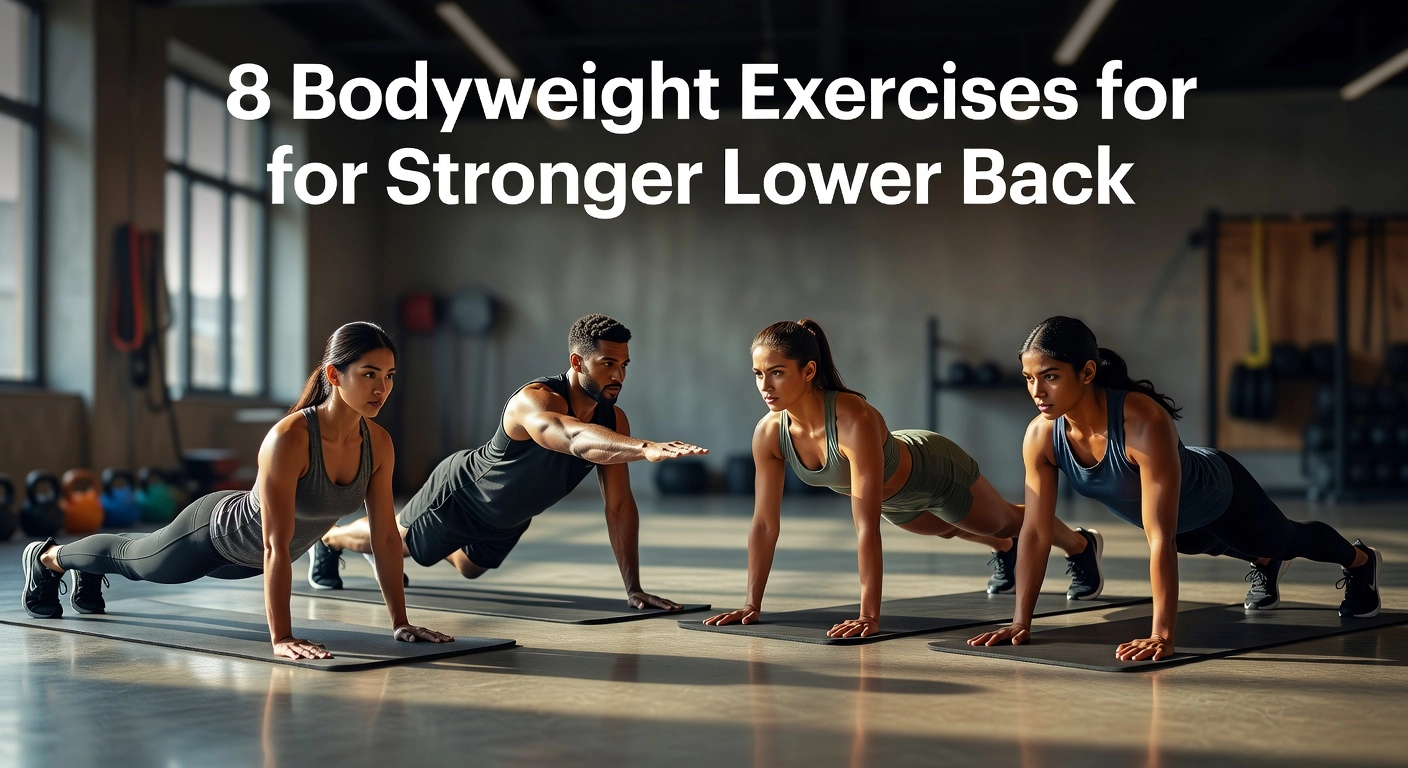
Is your lower back aching after a long day of sitting or light daily activities? You are not alone. Many beginners experience lower back discomfort due to weak muscles, poor posture, or sedentary lifestyles. The good news is that targeted strength training can transform this weakness into resilience. Strengthening your lower back enhances stability, prevents injuries, and boosts overall mobility.
Enter bodyweight lower back exercises: simple, equipment-free movements designed specifically for beginners like you. These exercises require no gym membership or fancy tools. They focus on core engagement, proper form, and progressive challenge to build a rock-solid foundation. In this guide, you will discover eight proven lower back exercises. Each one comes with step-by-step instructions, beginner modifications, and tips to maximize results.
By the end, you will have a complete routine to incorporate into your week. Expect improved posture, reduced pain, and greater confidence in your movements. Start today, and feel the difference in weeks. Your stronger lower back awaits.
The Lower Back Pain Epidemic in 2026
Low back pain has reached epidemic proportions worldwide, affecting hundreds of millions and straining healthcare systems. According to the World Health Organization (WHO), there were 619 million cases globally in 2020, a figure projected to surge to 843 million by 2050 due to aging populations, sedentary lifestyles, and rising obesity. Statista forecasts that by 2030, 7.3% of the world’s population will experience lower back pain, highlighting the urgent need for accessible prevention strategies. These trends, detailed in recent Global Burden of Disease studies published in The Lancet Rheumatology00098-X/fulltext), show no signs of slowing into 2026, with absolute case numbers climbing despite some improvements in age-standardized rates.
Impact on Working-Age Adults
The crisis hits hardest among working-age individuals aged 15 to 64, with 452.8 million prevalent cases reported in recent PubMed analyses, a staggering 52.66% increase since 1990. This group accounts for about 70% of all lower back pain-related disability in the 20-65 age range, leading to massive productivity losses, absenteeism, and economic burdens. Sedentary jobs, poor ergonomics, and remote work trends exacerbate the issue, turning minor strains into chronic problems that sideline careers and daily function.
Lifetime Risk and Market Growth
A lifetime risk of 60-80% means most people will face lower back pain at some point, as noted in the Spine Journal. The chronic lower back pain market underscores the scale, valued at $8.41 billion in 2026 and expected to reach $10.06 billion by 2030 with a 4.6% CAGR. Beginners can combat this through preventive bodyweight training, which strengthens the core, glutes, and erector spinae without equipment. Simple routines like glute bridges or bird dogs, ideal for home or one-on-one sessions, reduce risk by 20-50% per PubMed reviews, promoting stability and posture for long-term wellness. Start with 2-3 sets of 10 reps daily to build resilience against this growing epidemic.
Key Benefits of Lower Back Strengthening
- Reduce Injury Risk and Alleviate Chronic Pain Strengthening the erector spinae, glutes, core, hamstrings, and hip flexors provides robust support to the lumbar spine, directly targeting the root causes of lower back pain. With 619 million global cases in 2020 projected to rise to 843 million by 2050 according to WHO data, these bodyweight exercises break the pain cycle by enhancing muscle endurance and reducing strain on discs and ligaments. Beginners can start with glute bridges, holding for 5-10 seconds over 10 reps to activate glutes and core stabilizers. A Harvard Health review shows such routines yield 30-76% pain reduction in chronic cases. In one-on-one training sessions, trainers tailor progressions to individual biomechanics, minimizing injury risk from sedentary lifestyles or poor posture.
- Improve Posture, Spinal Alignment, and Stability A fortified lower back promotes neutral spine alignment, countering forward slouch from weak erectors and tight hip flexors. This boosts stability for everyday lifts or sports like running, where balanced force transfer prevents twists. Practice bird dogs on all fours, extending opposite arm and leg for 20-second holds to build proprioception. Mayo Clinic endorses this for better posture synergy between upper and lower back. Athletes see enhanced performance, with studies noting fewer injuries via posterior chain work.
- Promote Functional Core Stability per 2026 Trends Shift from static planks to deep transverse abdominis activation, as 2026 trends favor Pilates-inspired moves like dead bugs for true spinal control. These outperform planks by engaging multifidus without lumbar strain, aligning with functional training for real-world demands. Aim for 3 sets of 8-12 reps daily. This preventive approach suits home bodyweight routines, reducing lifetime LBP risk of 60-80%.
- Enhance Overall Wellness with Holistic Recovery Lower back strength elevates metabolism, mobility, and mood, complementing sports massage to release tight muscles and boost circulation post-workout. Integrate in women’s or men’s personal training for personalized wellness. Consistent practice, twice weekly, fosters long-term health amid rising LBP prevalence.
1. Glute Bridge
The glute bridge stands as a cornerstone bodyweight exercise among effective lower back exercises for beginners, targeting the posterior chain to build strength and prevent pain. With global low back pain cases projected to reach 843 million by 2050, this move activates key stabilizers, countering sedentary lifestyles that weaken glutes and overload the spine. Studies show it delivers peak gluteus maximus activation, superior to many alternatives for lumbar support.
Follow these step-by-step instructions for proper form:
- Lie on your back with knees bent, feet flat on the floor hip-width apart, and arms at your sides.
- Engage your core and squeeze your glutes to lift your hips until your body forms a straight line from knees to shoulders.
- Hold for 2-3 seconds at the top, then lower slowly with control.
- Perform 10-15 reps for 2-3 sets, resting 60-90 seconds between.
It primarily targets glutes, hamstrings, erector spinae, and core muscles like the transverse abdominis, reducing lumbar stress by 90% in non-specific cases through balanced posterior chain recruitment. For more details, see the NASM guide or WebMD instructions.
Tips for success: Avoid arching your lower back by tucking your pelvis and engaging abs; exhale during the lift to maintain stability. Beginners should progress to single-leg variations only under trainer guidance to prevent compensation. Drive through heels to maximize glute focus.
Ideal for home workouts or one-on-one sessions at The McLeod Method, where personalized women’s or men’s training ensures safe bodyweight progressions aligned with your biomechanics. Incorporate 3-4 times weekly to enhance posture and daily function, as backed by recent back pain statistics.
2. Bird Dog
The Bird Dog is an essential bodyweight exercise among the best lower back exercises for beginners, targeting core stability and spinal alignment with zero equipment. Start on all fours in a quadruped position, hands under shoulders and knees under hips, engaging your core to maintain a neutral spine. Extend your right arm forward and left leg backward, both parallel to the floor, forming a straight line from fingertips to toes; squeeze your glutes and keep hips level. Hold for 5-10 seconds while breathing steadily, then return to start and alternate sides for 8-12 reps per side, completing 2-3 sets with 30-60 seconds rest. For beginners, lift one limb at a time if needed. Detailed guidance is available at Verywell Fit and Healthline.
This move builds erector spinae strength and deep core activation, including the transversus abdominis and obliques, improving balance and reducing asymmetry-related pain that contributes to the 452.8 million working-age low back pain cases worldwide. EMG studies show high muscle engagement with minimal lumbar stress, making it ideal for pain relief and posture correction in sedentary lifestyles. A common mistake is rotating hips; fix it by bracing obliques and imagining a glass of water balanced on your lower back. For advancement, add a knee-to-elbow crunch from the extended position to boost dynamic stability. As a perfect bodyweight option, it’s tailor-made for home routines or one-on-one personal training sessions focused on preventive wellness. Incorporate it 3-5 times weekly to enhance daily function and combat the projected 7.3% global prevalence by 2030, per recent data.
3. Superman
The Superman exercise is a premier bodyweight option among the best lower back exercises for beginners, mimicking a flying pose to deliver targeted strength without any equipment. Lie face down on a mat or soft surface, arms extended overhead with palms facing each other, and legs straight behind you. Engage your core and glutes, then exhale as you lift your chest, arms, and legs simultaneously 4-6 inches off the ground, squeezing your shoulder blades together. Hold this position for 3-5 seconds while maintaining steady breaths, then inhale and lower slowly to the start without arching your lower back. Perform 10-12 reps for 2-3 sets, resting 30-60 seconds between sets, as recommended by Healthline and ACE Fitness guidelines.
This movement directly fortifies the erector spinae muscles, providing essential spinal support and combating sedentary posture issues linked to prolonged sitting. With low back pain affecting 452.8 million working-age adults globally in 2021, a 52.66% rise since 1990 per a Frontiers in Public Health study, Superman builds stability to prevent such risks. It also activates glutes, hamstrings, and deep core stabilizers for better alignment during daily activities.
Keep your gaze down at the floor to protect your neck from strain. Beginners can start with shorter lifts; progress by holding longer up to 10 seconds or adding 5-10 small pulses at the top. Integrate into one-on-one bodyweight sessions for personalized form checks and gradual advancements.
4. Dead Bug
The Dead Bug ranks as a top bodyweight exercise among effective lower back exercises for beginners, emphasizing controlled movements to fortify deep core stability without equipment. Begin by lying on your back on a mat, arms extended straight up toward the ceiling, and knees bent at 90 degrees in a tabletop position with shins parallel to the floor. Engage your core by pressing your lower back firmly into the ground, then slowly extend your opposite arm and leg toward the floor, hovering just above without arching your spine. Inhale to return to start, then alternate sides for 10 reps per side, completing 2-3 sets with 2-3 second holds per extension. This anti-extension movement trains the transverse abdominis (TVA), the deepest core muscle acting as a natural corset to prevent lower back overload and reduce shear forces on the spine.
As an ideal rehab tool, it counters the global low back pain crisis, where 619 million cases affected people in 2020, projected to reach 843 million by 2050 per WHO data. A 2026 meta-analysis shows core stability training like this cuts chronic pain significantly (SMD -0.95). Common mistake: lumbar arching from weak TVA; fix it by sliding a hand under your back for feedback and prioritizing quality. It suits pregnancy modifications, with shallow ranges and pelvic floor focus for safe postpartum recovery. Aligned with 2026 trends in functional deep core work, incorporate it 3-4 times weekly in one-on-one sessions for personalized progressions. See the Verywell Fit guide or Healthline tutorial for visuals.
5. Cat-Camel
The Cat-Camel stands as a foundational bodyweight exercise among the best lower back exercises for beginners, offering gentle spinal mobility to combat everyday stiffness. Start on all fours with hands under shoulders and knees under hips, maintaining a neutral spine. Inhale deeply to enter the Camel phase: drop your belly toward the floor, arch your lower back, lift your head and tailbone, and open your chest for a smooth extension. Exhale to transition into the Cat phase: round your spine toward the ceiling, tuck your chin to your chest, and draw your tailbone under for full flexion. Flow through 8-10 cycles at a controlled pace of 3-4 seconds per transition, emphasizing rhythmic breathing to enhance relaxation and control.
This dynamic movement mobilizes the entire spine while activating stabilizing muscles like the multifidus and transverse abdominis, as supported by Mayo Clinic recommendations for tension relief. It reduces lower back tightness from prolonged sitting, improves posture, and promotes circulation without compressive load. Beginners appreciate its low-impact nature, making it ideal for daily routines to prevent the 619 million global low back pain cases reported by WHO.
For progression, hold each end range for 15-30 seconds to build endurance, or add segmental waves for advanced control. Integrate it with sports massage during one-on-one training sessions to amplify recovery and tissue release. Perform daily as a warm-up in private gym settings for sustained mobility gains.
6. Pelvic Tilt
The Pelvic Tilt ranks as a premier bodyweight exercise among the best lower back exercises for beginners, hailed by orthopedic experts at Orthopedics Rhode Island as their top recommendation for alleviating low back pain through core activation and spinal stabilization. To perform it correctly, lie on your back on a mat with knees bent at about 60 degrees, feet flat on the floor hip-width apart, and arms relaxed by your sides. Exhale as you engage your deep abdominal muscles, drawing your belly button toward your spine while gently squeezing your glutes to tilt your pelvis posteriorly, flattening your lower back completely into the floor. Hold this position for 5 seconds while breathing normally, then inhale to release back to a neutral spine with a slight natural arch. Aim for 12-15 repetitions per set, completing 2 sets daily, ideally in the morning and evening for consistent progress.
This exercise targets the transverse abdominis and multifidus muscles, enhancing lumbar proprioception and awareness to prevent strain during daily activities like sitting or lifting. With low back pain affecting 619 million people globally in 2020 and projected to reach 843 million by 2050, according to the World Health Organization, pelvic tilts build foundational stability that reduces injury risk by up to 68% in structured programs. Beginners often notice improved posture and reduced tightness after just two weeks of regular practice.
For optimal results, visualize “imprinting” your spine into the mat to isolate the movement and avoid compensatory hip or leg motion; place a rolled towel under your lower back for tactile feedback if needed. Once mastered, progress to the standing version: feet hip-width apart, hands on hips, tilting the pelvis backward against a wall for 10 reps to translate supine control into functional upright stability. Perfect for one-on-one personal training sessions, this scalable move empowers women and men alike in bodyweight wellness routines.
7. Knee-to-Chest
The Knee-to-Chest stretch ranks as an essential bodyweight exercise among the best lower back exercises for beginners, providing gentle relief from tension while enhancing spinal mobility. Lie flat on your back on a mat with knees bent and feet flat on the floor at hip-width. Extend one leg straight out while hugging the opposite knee toward your chest using both hands interlaced behind the thigh. Gently pull until you feel a mild stretch in your lower back and glutes, hold for 20-30 seconds while pressing your lower back into the floor and breathing deeply, then switch sides. Perform 5 reps per side, ideally 1-2 times daily after a short warm-up like walking.
This move primarily stretches the erector spinae, thoracolumbar fascia, glutes, and hip flexors like the iliopsoas, while engaging the core for stability; it also eases sciatica symptoms by decompressing the lumbar spine and relaxing the piriformis muscle, with many experiencing relief in 4-6 weeks alongside strengthening routines. Keep your head relaxed on the floor to avoid neck strain. For progression, try the double knee-to-chest variation by hugging both knees after mastering the single side, holding 20-30 seconds for 2-3 reps. It perfectly complements prior exercises like the glute bridge or bird dog in your routine, promoting balanced flexibility and strength. Beginners in one-on-one training sessions can tailor it to personal biomechanics for optimal results, reducing the risk of the 619 million global low back pain cases reported in 2020.
8. Reverse Snow Angel
The Reverse Snow Angel stands as a superb bodyweight exercise among the best lower back exercises for beginners, delivering targeted activation to the upper and lower back erectors, rear deltoids, and scapular stabilizers while boosting thoracic mobility. Lie face down on a mat or floor with your legs extended straight, forehead lightly resting down, and arms at your sides with palms facing up. Engage your core and glutes to maintain a neutral spine, then slightly lift your chest 2-4 inches off the ground. Slowly slide your arms upward in a wide arc toward overhead, rotating palms down as you form a “Y” shape, squeezing your shoulder blades together at the top for 1-2 seconds. Reverse the motion in a controlled sweep back to the starting position. Aim for 10 reps per set at a deliberate 3-4 second tempo per direction to ensure full muscle engagement.
This no-equipment finisher excels in posterior chain strengthening, countering desk-induced posture slumps and reducing lower back tension prevalent in 619 million global cases as per WHO data. Beginners benefit from enhanced spinal stability and shoulder freedom, with one study tester reporting taller posture and better squat mechanics after daily sets. Avoid common pitfalls like shrugging shoulders or using momentum, which diminish effectiveness and risk neck strain; instead, keep upper traps relaxed and chest consistently lifted. Pair it with glute bridges from earlier in your routine for comprehensive support. Integrate 2-3 sets 2-3 times weekly, progressing by holding the top position longer, perfect for home bodyweight sessions or personalized one-on-one training.
Common Mistakes and Pro Tips
- Overarching the Back: Always Maintain Neutral Spine Many beginners arch their lower back excessively during bodyweight lower back exercises like glute bridges or supermans, compressing spinal joints and increasing injury risk by up to 50%. This “banana back” shifts load from glutes and core to the lumbar area, leading to flare-ups. Experts recommend prioritizing a neutral spine position, where your ears, shoulders, hips, and ankles align in a straight line. Imagine balancing a glass of water on your lower back without spilling. Use a mirror for self-checks or seek trainer feedback during private gym sessions. In one-on-one training, personalized cues ensure proper alignment from day one, building safe habits.
- Skipping Warm-Ups: Start with Pelvic Tilts Jumping straight into lower back exercises without warming up raises strain risk by 30-40%, as cold muscles compensate with lumbar overload. Begin every session with pelvic tilts: lie on your back, knees bent, tilt your pelvis to press the low back into the floor, hold for 5-10 seconds, and repeat 10-15 times. This activates the transverse abdominis for core stability. Progress gradually to marches or leg lowers, adding 5-10 minutes of light walking. Such preparation prevents flare-ups, especially in bodyweight routines targeting erector spinae and glutes.
- Ignoring Form: Prioritize Quality Over Reps Rushing reps with poor posture in bird dogs or dead bugs provokes disc pressure and nerve pain, common in 90% of non-specific low back issues. Focus on controlled movements: stop when form breaks, aiming for 8-12 quality reps. Quality trumps quantity to fortify stability without setbacks. Consider one-on-one personal training, tailored for women or men, to address imbalances like weak glutes. Private sessions customize progressions, yielding 70% better pain reduction than generic plans.
- Incorporate Recovery: Pair with Sports Massage Neglecting recovery tightens muscles like the quadratus lumborum, perpetuating pain cycles after lower back exercises. Integrate sports massage 1-2 times weekly to release trigger points, reduce inflammation, and enhance mobility. This pairs perfectly with bodyweight training for holistic wellness. Combine with pelvic tilts for optimal results, supporting long-term spinal health amid rising global low back pain cases.
Actionable Takeaways for a Stronger Back
- Incorporate 3-4 Exercises Three Times Weekly: Select from proven bodyweight lower back exercises like Glute Bridge, Bird Dog, Superman, or Dead Bug, performing 2 sets of 10-12 reps to start. This frequency aligns with functional core stability trends, building erector spinae and glute strength to counter the 619 million global low back pain cases reported by WHO in 2020. Track progress in a journal, noting reps, form quality, and pain levels; beginners often see stability gains within 4 weeks. Gradually increase to 3 sets as endurance improves.
- Pair with Posture Checks and Ergonomics: Daily posture assessments, such as aligning ears over shoulders during desk work, enhance prevention alongside exercises. Adjust workspaces with lumbar supports or standing desks to reduce strain, vital given the 60-80% lifetime low back pain risk. Set phone reminders for hourly checks.
- Seek Personalized Plans at The McLeod Method: For postpartum recovery or injury rehab, book private gym sessions or womens personal training tailored to your biomechanics. Experts customize progressions, integrating sports massage for holistic wellness.
- Consult Pros and Build Long-Term Habits: If pain persists beyond two weeks, see a professional immediately. Embed bodyweight training into your routine for sustained gains, slashing chronic pain risks amid projections of 843 million cases by 2050. Consistency yields lifelong spinal health.
Conclusion
In summary, these eight bodyweight exercises offer a beginner-friendly path to a stronger lower back. They require no equipment, focus on proper form and core engagement, and provide modifications for all levels. You gain a complete weekly routine that builds stability, improves posture, and reduces pain from sedentary habits.
The value is clear: consistent practice transforms weakness into resilience, prevents injuries, and enhances daily mobility. Start today by selecting three exercises to try. Commit to the full routine three times a week, tracking your progress. Listen to your body, prioritize form, and celebrate small wins.
Your journey to a pain-free, confident back begins now. Take action, stay consistent, and unlock the strength within you.
1 thought on “8 Bodyweight Exercises for Stronger Lower Back”