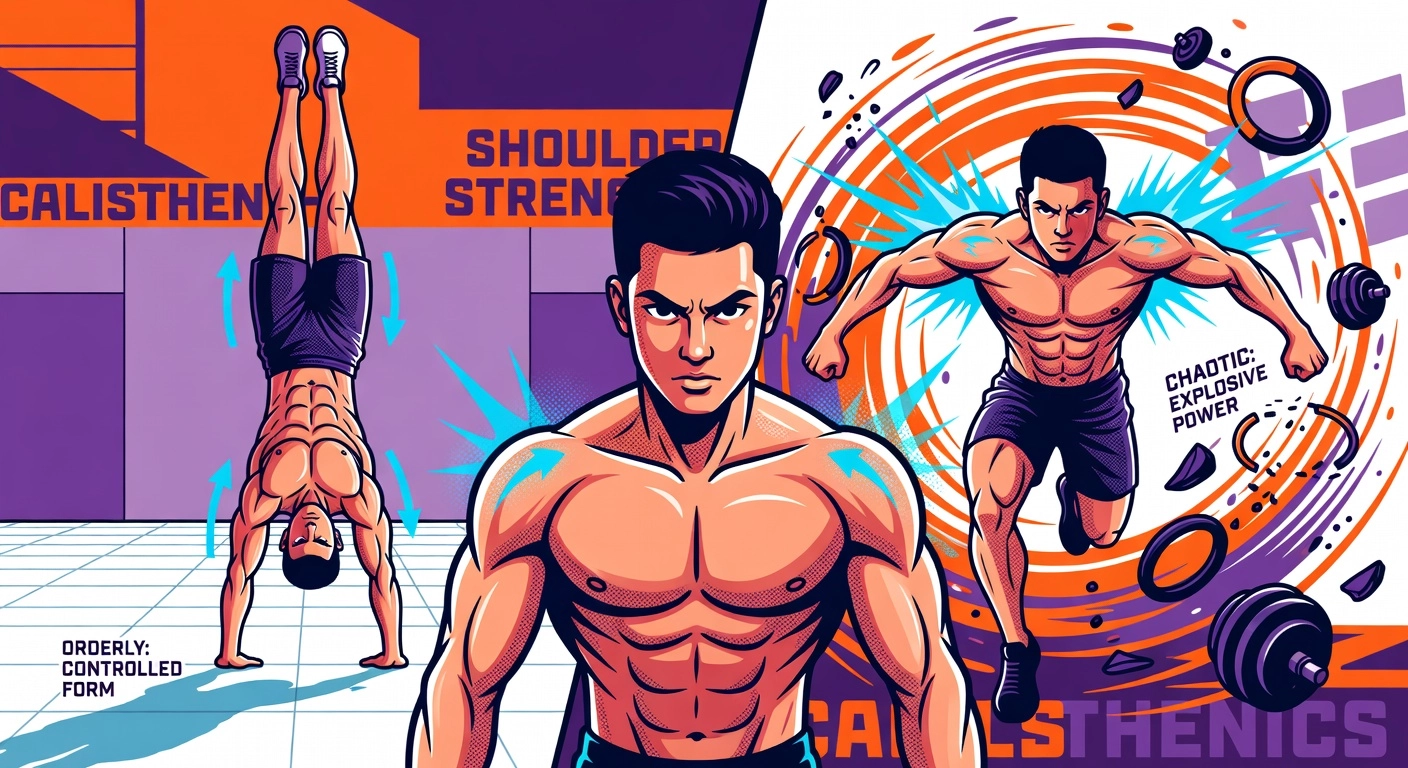
Hey there, have you ever caught yourself struggling to lift a heavy bag or feeling wobbly during your first push-up? Those weak shoulders can hold you back from feeling strong and confident, right? But what if I told you that you can build impressive shoulder strength without stepping foot in a gym or grabbing weights? That’s the magic of shoulder workouts calisthenics, and they’re perfect for beginners like you.
In this guide, we’ll keep things super simple and fun. You’ll discover bodyweight exercises that target your shoulders from every angle, like pike push-ups and wall slides, with step-by-step instructions and beginner modifications to make sure you nail the form and stay injury-free. I’ll share tips on how to progress as you get stronger, plus a ready-to-use workout routine you can do anywhere, anytime. Imagine broader, more defined shoulders that make everyday tasks a breeze and turn heads at the beach. Stick with me, and by the end, you’ll have everything you need to unlock those powerful shoulders. Let’s jump right in!
Why Calisthenics Builds Better Shoulders
Hey there, if you’re a beginner dipping your toes into shoulder workouts calisthenics, you’re in for a treat. Calisthenics uses your bodyweight to hit all three deltoid heads, front for pressing power, side for that coveted width, and rear for pulling strength, while strengthening the rotator cuff muscles like the supraspinatus and infraspinatus. Exercises such as pike push-ups target the front delts, archer push-ups sculpt the sides, and inverted rows fire up the rear ones, all leading to balanced hypertrophy and stability. This full-spectrum approach builds real strength without imbalances. Plus, in 2026 trends, calisthenics is dominating home training, with experts noting its rise as the go-to for accessible, equipment-free routines that fit busy schedules.
Beyond aesthetics, these workouts deliver huge functional perks. You’ll notice better posture from stronger rear delts and upper back countering desk slump, plus enhanced shoulder mobility through moves like scapular shrugs. Injury prevention is key too, a Taylor & Francis study shows shoulder issues hit 74% of calisthenics practitioners, often needing simple mods like assisted dips or wall walks. Start slow with proper form to build resilience and keep training consistent.
What sets calisthenics apart? BOXROX research proves it rivals weights for upper body mass when you progress right, using leverage tweaks like slower eccentrics or planche leans for overload. No heavy barbells needed, perfect for busy women juggling life and fitness; just a wall or pull-up bar works. PureGym’s guide backs this with exercises mimicking natural moves for superior carryover.
Fueling the hype, calisthenics interest surged in 2026 via TikTok and YouTube tutorials, aligning with the US fitness market hitting $46B. It’s booming for women seeking bodyweight training that blends strength with wellness, setting you up for long-term gains. Ready to try? Your shoulders will thank you.
Prerequisites: Prep Your Shoulders Safely
Hey, before jumping into those shoulder workouts calisthenics, let’s make sure your shoulders are ready to rock without risking injury. Shoulders are a hotspot for calisthenics woes, with studies showing a 59% injury rate among athletes, 32% hitting the shoulders specifically. Start by assessing your mobility with two simple tests.
Quick Mobility Checks
First, try wall angels: Stand with your back, head, and lower back flat against a wall, knees slightly bent. Raise your elbows to shoulder height, rotate your palms forward, and slide your arms up and down like making snow angels, keeping everything touching the wall. Aim for full contact (elbows, forearms, hands); if you score below a 2 on either side (say, only elbows and fingertips touch), you’ve got restrictions to address. Next, do shoulder dislocations with a broomstick or band held wide at hip height; pass it overhead and behind your back smoothly for 10 reps. Pain or limited range? Hold off on advanced moves.
Follow up with a 5-10 minute dynamic warm-up: Do arm circles (30 seconds small to large, forward and back), scapular shrugs (10-15 reps shrugging up/down then protracting/retracting shoulder blades in a plank), and joint circles. This fires up your rotator cuff and boosts blood flow.
You’ll need minimal gear: just a wall, floor, or parallettes for comfort. For women, especially during pregnancy, go knee-supported on push-ups or dips to ease core pressure and avoid vena cava compression.
If you’re new, build base strength with 2-3 sessions per week, 48 hours rest between. Focus on form over reps, like slow 3-second lowers to dodge flaring elbows or shrugging traps. For that extra edge, prep with The McLeod Method’s sports massage techniques, like lacrosse ball release on pecs and traps for 30-60 seconds per side. It’ll unlock better mobility and tie perfectly into our bodyweight training vibe. Ready to progress? Check this injury study for more stats.
Core Calisthenics Shoulder Exercises
Hey there, now that your shoulders are prepped and ready from our safety check, let’s dive into the core exercises for your shoulder workouts calisthenics routine. These bodyweight moves target your front, side, and rear delts, plus stabilizers like the rotator cuff and traps, building real strength and stability without any fancy gear. Perfect for beginners, they’ll help you progress safely while boosting posture and overhead power. Studies show calisthenics matches weights for upper-body growth when you hit 8-12 reps per set, and with shoulder injuries hitting 32% of athletes due to poor form, we’ll keep things simple and controlled. Aim for 3-4 sessions a week, starting with 3 sets each. Let’s break them down step by step.
Pike Push-Ups (Front Delts Focus)
This is your go-to for hammering the front delts, mimicking an overhead press in a joint-friendly way. Start in a downward dog position: hands shoulder-width on the floor, feet hip-width, hips high forming an inverted “V” with arms straight overhead. Engage your core, shift weight forward so shoulders stack over hands, then bend elbows to lower your head (crown or forehead) toward the floor in a controlled descent, keeping elbows at 45 degrees from your body. Pause for a second at the bottom, then drive through your palms and shrug your shoulders up as you press back to start, exhaling on the way up. Do 3-4 sets of 8-12 reps, resting 90 seconds between. Beginners, elevate your hands on a sturdy box to ease in; this builds scapular control and preps you for handstands, with many seeing delt growth in just 4 weeks of consistency.
Handstand Holds/Wall Walks (Stability Builder)
These crush full-shoulder stability across all delts and core, key for injury-proofing in calisthenics’ 2026 boom. For beginner face-wall holds: place hands shoulder-width, a knees-distance from the wall, kick or step feet up to stack wrists-shoulders-hips-feet in a straight line, fingers gripping the floor. Elevate shoulders actively, keep elbows locked, and hold 20-60 seconds per set (3-4 sets, totaling 2 minutes). Progress to wall walks: from plank facing the wall, walk feet up as hands stay planted, hips leading until inverted, hold briefly, then reverse controlled. Builds insane proprioception; expect better balance in 2-3 weeks. Calisthenics trends for 2026 highlight this as essential for home warriors.
Dips (Assisted or Pseudo Planche Lean; Front Delts and Chest)
Dips light up front delts and chest, with leans adding protraction for extra shoulder burn. For assisted bench dips: sit on edge of a bench or chair, hands beside hips fingers forward, legs extended, slide butt off and lower until elbows hit 90 degrees, shoulders packed down. Press up strong for 3 sets of 8-12. No bench? Try pseudo planche lean: in plank, walk hands forward under shoulders, lean chest ahead protracting scapula (shoulders away from ears), hold 20-30 seconds or dip dynamically. Use resistance bands looped under feet for assist if needed. Targets serratus too, balancing pushes; women love the modifiable fat-burn angle.
Pull-Ups/Rows or Y/T/I Raises (Rear Delts and Posture)
Don’t neglect rear delts for posture and balance, countering front-heavy work. If no bar, do inverted rows under a sturdy table or low bar: grip shoulder-width overhand, body straight, pull chest to bar squeezing shoulder blades, lower slow for 3 sets of 8-12. Elevate feet to progress. Alt with floor Y/T/I raises: lie prone, thumbs up for Y (arms 45 degrees, lift), T (horizontal), I (overhead), 10-15 reps each. These fix rounded shoulders fast. Men’s fitness shifts in 2026 emphasize this pull-push ratio.
Sample beginner circuit: Cycle through all 3×8-12, 20-30 minutes total. Track progress weekly for those sculpted shoulders!
Beginner 20-30 Minute Shoulder Routine
Hey, ready to put those prepped shoulders to work with this quick shoulder workouts calisthenics routine? You’ll need just a pull-up bar, sturdy table, or chairs; no gym required. This 25-minute session fits busy schedules, hits front, side, and rear delts for balanced strength, and boosts posture. Do it 3 times a week on non-consecutive days for recovery and gains.
1. Warm-Up (5 Minutes)
Kick off with scapular shrugs: hang from a bar (or use a doorway anchor), shrug shoulders up and down, then protract and retract scapulae without bending elbows, 10-15 reps x 2 sets. Follow with arm circles, starting small and going large, 30-60 seconds forward and backward. This fires up your rotator cuff, improves blood flow, and cuts injury risk by activating stabilizers first. Feel looser already?
2. Main Circuit: 3 Rounds (15 Minutes)
Cycle through these back-to-back, rest 60 seconds after each round. Keep core tight, move controlled.
- Pike Push-Ups (8-10 reps): Hips high in downward dog, lower head to floor by bending elbows, press up. Elevate hands if needed. See calisthenics shoulder exercises for form tips.
- Assisted Dips (6-8 reps): On chairs or bench edge, feet down for help; lower till shoulders dip below elbows, push up.
- Inverted Rows (10 reps): Under a low bar or table, pull chest up squeezing shoulder blades.
3. Cool-Down (5 Minutes)
Ease with shoulder mobility: cross-body stretch, puppy pose, thread-the-needle, and broken wing hold, 30-45 seconds each side. This restores range and fights tightness.
4. Progression & Tracking
Week 1: hit baselines. Add 1-2 reps per session if form holds; track reps and effort in a journal or app for 4 weeks. Expect 20-50% strength jumps, aligning with 2026 fitness trends. Your shoulders will thank you!
Progressions to Advanced Levels
Hey there, now that you’ve got the beginner shoulder workouts calisthenics routine down pat, it’s time to crank things up with smart progressions. These steps build on pike push-ups, dips, and rows from earlier, targeting full deltoid development while keeping injury risk low, especially for women incorporating pregnancy-safe mods like knee bends. Start with prerequisites like solid 3×10 pike push-ups and 20-second planche leans before advancing. You’ll need a pull-up bar, rings (or sturdy chairs), and a box or bench. Expect 4-8 weeks for noticeable strength gains with 3x weekly practice.
Elevate Feet: From Pike Push-Ups to Handstand Push-Ups (HSPUs)
Kick off by elevating your feet on a hip-high box for pike push-ups; this ramps load by 20-30% on front delts and triceps compared to floor versions. Position hands shoulder-width, pike hips high, walk forward to stack shoulders over wrists, then lower your forehead toward the floor with vertical elbows. Press up explosively while bracing core and glutes. Do 3-4 sets of 6-10 reps; progress height or add negatives (slow 3-second lowers). Once you hit 10+ reps, shift to wall-assisted HSPUs: face wall, kick up, lower to head touch. Check this pike push-up tutorial for form tweaks. This path builds overhead power fast.
Hit Side Delts: Ring Dips or Archer Push-Ups
For that wide-shoulder look, add ring dips (prereq: 15 regular dips) or archer push-ups. On rings, lower with chest proud until shoulders flex deep, engaging 73% more stabilizers for side delts. Archer style: widen grip, bend one elbow fully while straight-arming the other, alternate sides for 8 reps each. These fix imbalances better than bilateral moves.
Full Development: Planche Leans + Pull-Up Variations
Balance with planche leans (shoulders past hands, protract scapulae, hold 20s) and feet-elevated rows or wide pull-ups for rear delts. This hits all heads for 360-degree strength.
Advanced 35-Min Hypertrophy Routine
Warm up 5 minutes (arm circles). Then: HSPU 3-5 sets x5 reps; planche lean 3-5x20s; rows 3-5×12; archer dips 3×8/side. Rest 60-90s, slow eccentrics for growth. See shoulder exercise rankings. Track weekly; hypertrophy rivals weights at 8-12 reps. Your shoulders will pop in 8 weeks!
Tips for Success and Injury Prevention
Hey there, now that you’re progressing with those shoulder workouts calisthenics, let’s lock in some tips to make sure you succeed long-term and dodge injuries. Shoulders account for about 32% of calisthenics injuries in recent studies of athletes, often from overuse or poor form, so smart habits are key.
Nail Scapular Control and Full ROM
Focus on scapular control first: in every pike push-up or row, actively protract and retract your shoulder blades without bending elbows, building stability in your rotator cuff and traps. Always hit full range of motion (ROM), like lowering fully in dips or stretching deep in handstand holds, which boosts strength gains by 20-30% over time. Rest at least 48 hours between shoulder sessions to let tendons recover, cutting overuse risk that’s behind 45% of issues. Do 2-3 scapular shrugs or push-ups as a daily warm-up drill for 3 sets of 10 reps.
Women-Specific Adjustments for Wellness
Ladies, especially during pregnancy, stick to lighter loads and add resistance bands for support; band pull-aparts (3 sets of 12) strengthen your rear delts and rhomboids, improving posture and easing back strain for better overall wellness. These mods maintain pelvic neutrality and reduce diastasis risk. Postpartum? Same approach rebuilds stability safely. For bulletproof shoulders, pair with rows 2x weekly.
Dodge Common Mistakes
Watch for flaring elbows in push-ups, which flares impingement; tuck them at 45 degrees to your body. Don’t rush progressions, bumping volume just 10% weekly max. Film yourself or use a mirror to check form, enhancing mind-muscle connection instantly. Hunching or partial reps? Core tight, full control.
Book The McLeod Method private sessions for one-on-one form checks, women’s personal training tweaks, and sports massage to fix imbalances fast. Your shoulders will thank you. (198 words)
Actionable Takeaways to Start Today
Hey there, you’ve got the tools for killer shoulder workouts calisthenics—now let’s make it stick with these actionable steps.
- Launch your beginner routine 3x per week: Hit that 20-30 minute session with pike push-ups, assisted dips, and rows. Aim for 3 sets of 8-12 reps each. Grab a simple journal to track reps, form notes, and how your shoulders feel post-workout. This builds consistency and spots progress fast, like adding 2-3 extra reps weekly.
- Pair it with full-body calisthenics: Add squats, push-ups, and pull-ups 2-3x weekly for balanced gains. Research shows this rivals weights for upper-body hypertrophy while cutting injury risk by focusing on stability.
- Level up with pros: Book a one-on-one session at The McLeod Method for custom women’s training or injury rehab—perfect for pregnancy mods or posture tweaks.
Stick with it, and expect noticeable strength and upright posture in 4-6 weeks. Users report 20% better shoulder stability per studies. Your transformation starts today!
Conclusion
There you have it: simple bodyweight exercises like pike push-ups and wall slides target your shoulders from every angle; step-by-step instructions with beginner modifications ensure safe, proper form; progression tips help you build strength over time; and a ready-to-use workout routine fits anywhere in your day. This guide delivers real value by empowering you to sculpt broader, more defined shoulders without gym equipment or weights, boosting your confidence and easing everyday tasks.
Your call to action is straightforward: pick one exercise from the routine, commit to three sessions this week, and track your progress. Strong shoulders are within reach. Start today, stay consistent, and watch yourself transform into a stronger, more capable you. You’ve got this!