
Most sessions in a gym look the same from the outside: a warm-up, some sets, a bit of sweat, a finish. What separates a designed block from a stack of twelve appointments is invisible to anyone watching. It lives in the sequence, the exercise choices, and the points where load actually changes. This case study opens up one client’s full private gym block and shows the programming mechanics in detail. It skips the beginner explainer and goes straight to the decisions that make a block work: how the assessment picks the exercises, what job each session performs, and how load moves in small, triggered steps of 2 to 10 percent. You will see the twelve-session arc broken into four sections: what each session is actually for, how baseline and movement quality set the opening, how the main loading phase is structured, and how the closing checkpoint judges progress. It also covers why a shared gym timetable cannot program for one person, and the honest scope and limits of this approach. If you have been searching for personal training near me that treats programming as a sequence rather than a service, this is what that looks like in practice.
A Block Is a Sequence, Not Twelve Sessions
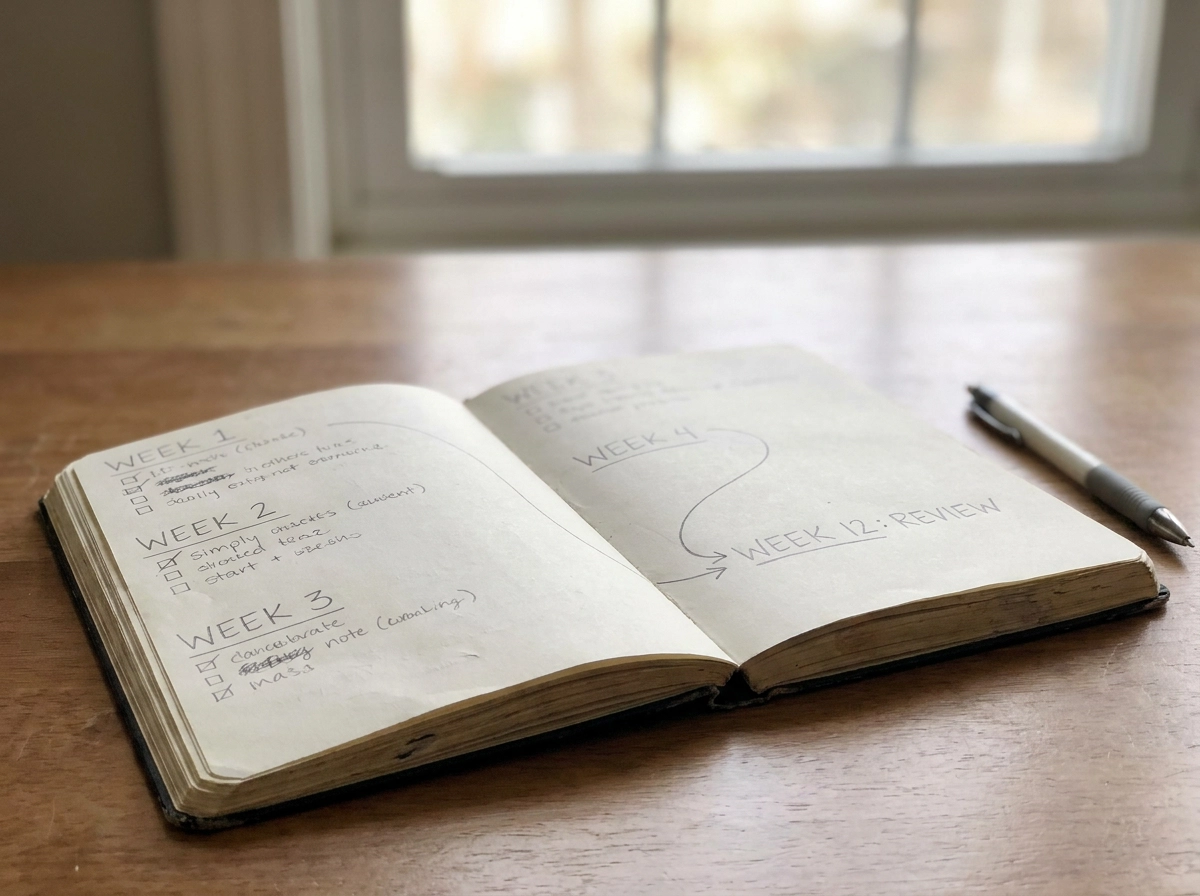
A private gym block is one continuous piece of work with a beginning, a middle and a judged end. A series of sessions is what you get when nothing links one week to the next.
This piece is an illustrative arc of how I plan a twelve-session block: a worked example of method, not a reported client outcome, so no bodyweight, load or time result is attached to it.
The distinction you pay for sits in the decisions. In a block, session five exists because of what the early sessions showed. In a fixed timetable, it exists because it is Thursday. Personal training and programming are not the same purchase: personal performance training is the same lifts, ordered by one person’s assessment rather than a class slot.
What follows: how the assessment decides exercise selection, what each session is for, how load moves, how checkpoints judge progress, and where the method stops.
The Assessment Decides the Exercises
That sequence starts with screening, not loading. I screen the major movement patterns and relevant mobility restrictions, squat, hinge, push, pull, carry and single-leg, as part of the initial assessment. The screen decides the block, not a template. The ACSM progression guidance is explicit: recommendations apply in context and are contingent on goals, capacity and training status. No generic programme exists.
Selection changes. Restricted ankle dorsiflexion moves the squat to heel-elevated or box-supported for phase one, because the pattern, not strength, limits it. Overhead restriction swaps a standing barbell press for a landmine or neutral-grip press, with a thoracic mobility block beforehand. A client who cannot feel a hinge gets a drill progression before deadlift loading, drawing on progressive overload without a single weight; this changes the exercise, order and tempo.
Output: one-page block sheet lists exercises, order, starting loads and the checkpoint markers I will measure against. Training status sets rep ranges: novices work in higher-repetition ranges to build technique and tolerance; intermediate to advanced trainees periodise across a broader range, with heavier loading and longer rests introduced later. ACSM has published a 2026 update to its resistance training position stand, described as its first update in 17 years; treat any specific figures here as provisional until verified against that document.
What Each of the Twelve Sessions Is Actually For
With the assessment done, each session gets a job description: one primary job, one secondary job, stated in a single sentence. If it cannot be described that way, it is not planned, it is assembled.
Across twelve sessions I use four roles, a planning framework rather than a research finding: baseline and load introduction, accumulation, intensity exposure, and consolidation with review. They map onto the periodised loading ranges covered in the assessment section, but week number alone never assigns them. A poor night’s sleep, a heavy work week or a niggle moves a session’s role back, which is only possible when one person is being programmed.
I do not list the twelve as workouts, because each session only makes sense in light of what the preceding ones showed. The causal chain is the product.
The practical test: if your training week would look identical whether you turned up or someone else did, the sessions have no roles. Whether a trainer can explain those roles is a separate skill from the credentials on the wall (what credentials do not show).
Sessions 1 to 3: Baseline, Movement Quality and Load Introduction
Once a session has a role, phase one is about measurement, not stimulus. Each assessed pattern goes under load with conservative starting loads and higher repetitions, so technique gets rehearsed while the movements are still new.
Order is deliberate from the first set: large muscle groups before small, multi-joint before single-joint, higher intensity before lower intensity (ACSM 2009 ordering rationale). Sequencing it this way protects the quality of the work that matters most.
Every set is recorded: load, reps, tempo, rest, plus a short note on how the client moved and how they reported feeling. No failure training, no ego loading. These three sessions produce a clean baseline the next phase can be progressed from, nothing more.
In my method the first checkpoint sits at the end of this phase, so accumulation starts from a measured baseline rather than a remembered one. It is also where what a personal trainer actually does stops being a slogan and shows up in the log.
Sessions 4 to 8: The Main Loading Phase
From the baseline checkpoint, sessions four to eight are where the block does its work. Loads climb, but only on exercises held stable long enough to be progressed. Rest intervals tighten or lengthen by goal: hypertrophy work uses moderate rep ranges with shorter rests, while local muscular endurance work uses lighter loads, higher reps and briefer rest periods. Rep ranges and weekly frequency follow training status, so the block fits the client’s real week. Exercise selection can change here, but only for a reason I can write down. Swapping for variety alone breaks the comparison at the next checkpoint.
Sessions 9 to 12: Consolidation, Intensity Exposure and the Closing Checkpoint
By session nine, the block shifts from accumulation to consolidation. For trained clients, this is where heavier exposure appears, but only once technique and load tolerance have earned it. In my method, I may place a reduced-volume or deload session in this phase, positioned by the previous checkpoint and the client’s recovery signals rather than by the calendar. Consolidation means repeating the patterns under loads now tolerated, not adding new exercises to make the final week feel interesting. The closing checkpoint repeats the same measurements used earlier, so the block is judged as a whole and the next block starts from evidence, not memory. If you are comparing providers, this is the difference between programming and attendance; the same standard applies when choosing any personal trainer.
How Load Moves: The 2 to 10 Percent Trigger
The closing checkpoint judges the block, but inside each session load follows a rule, not a feeling. When the client performs one to two reps above target, the load moves. Set a target of eight; ten clean reps happen and that is the signal. The size is a recommended 2 to 10 per cent increase, the ACSM 2009 baseline progression model. I use the bottom of that range for single-joint or technically demanding lifts, the top for robust multi-joint work. That split is my practice, not a source finding.
Rounding matters more than precision. On fixed dumbbells, the smallest jump may exceed 10 per cent, so I hold load and progress reps, tempo or rest until a smaller increment exists. I hold it back when a rep arrives with a collapsed position, after poor sleep, or when a joint reported something last time. Then reps or tempo progress, not weight. Progress is not only load: reps, tempo, reduced rest, greater range and better control all count, so the block does not stall when plates cannot go on. The same principle guides progressing and varying back workouts.
Checkpoints: How Progress Gets Judged, and When
Load moves by rule, but judging whether the block worked is a separate act. A checkpoint is a scheduled review, not a feeling. In my blocks it is a fixed session within the twelve where execution stops and assessment begins.
What gets compared is deliberately narrow: the same exercises, loads, reps and quality markers recorded in the baseline phase, so the comparison is like for like rather than a vague sense of improvement. Criteria are agreed at the start, normally a defined load or rep target on the main patterns, a movement quality standard, and the client’s own report on daily function and soreness. This is the same logic behind how to progress and avoid plateaus: decide the signal before you chase it.
Timing is my method, not a research finding. No evidence base supports a specific week, so where a checkpoint sits is a practitioner’s scheduling decision and I say so plainly.
Outcomes go three ways: progress into a heavier next block, hold and repeat the phase while fixing the constraint, or refer on when pain or a red flag sits outside resistance training scope.
Why a Shared Gym Timetable Cannot Program for One Person
Those three outcomes are only possible when someone can act on them. A shared timetable programmes a group average. The ordering principles described earlier, large before small, multi-joint before single-joint, apply to one person’s session, not a room.
A class also cannot move a session’s role because you slept badly, or hold a load because a joint complained. There is no feedback loop fast enough to change the session in front of you.
Frequency recommendations also depend on training status, so the correct week for one client rarely matches a fixed class schedule. The prescription depends on goals, capacity and training status, and a shared timetable has no mechanism to read those for an individual.
So if you are comparing options and searching personal training near me, the useful question is not how many sessions are included but whether an assessment decides what happens inside them.
Scope, Limits and When I Refer On
That individual feedback is also where the method’s limits begin. This approach is built for healthy adults. As noted, these recommendations apply in context; they are not blanket-wide. Pain, unexplained symptoms, cardiovascular concerns, pregnancy or post-surgical recovery need medical clearance and appropriate referral, not a twelve-session plan. The load and progression figures used in this block come from the 2009 progression stand. ACSM has since published a 2026 position stand on resistance training prescription, described as its first update in 17 years; treat the earlier figures as 2009-baseline until verified against it. Recovery support, including sports massage and recovery work alongside training in private gym environments, sits next to the block where it suits the client. It is not a substitute for medical care or assessment.
What This Block Shows, and What to Do With It
None of that method is hidden, which is the useful part. You can apply the same test to any private gym block you are weighing up.
If your current training cannot answer what this session is for, you are paying for attendance rather than programming. Ask directly: what does today do for the block?
Before you commit to a block, ask to see three things: the assessment findings, the block plan, and the checkpoint criteria. Any provider worth the fee can produce all three without preparation.
Load progression should be a rule, not a mood. When you hit one to two reps above target, the load moves 2 to 10 per cent, or a different variable progresses with a reason attached and written down.
Expect a checkpoint that compares like with like, and a practitioner who says plainly when something sits outside their scope and refers you on. Ask those four questions before paying a deposit.
Conclusion
A private gym block earns its fee through structure, not attendance. Four things separate the two: an assessment that decides the exercises, a session-by-session purpose you can state out loud, load progression governed by a written rule rather than a mood, and checkpoints that compare like with like.
Ask the four questions first. The answers tell you more than any sales page can.