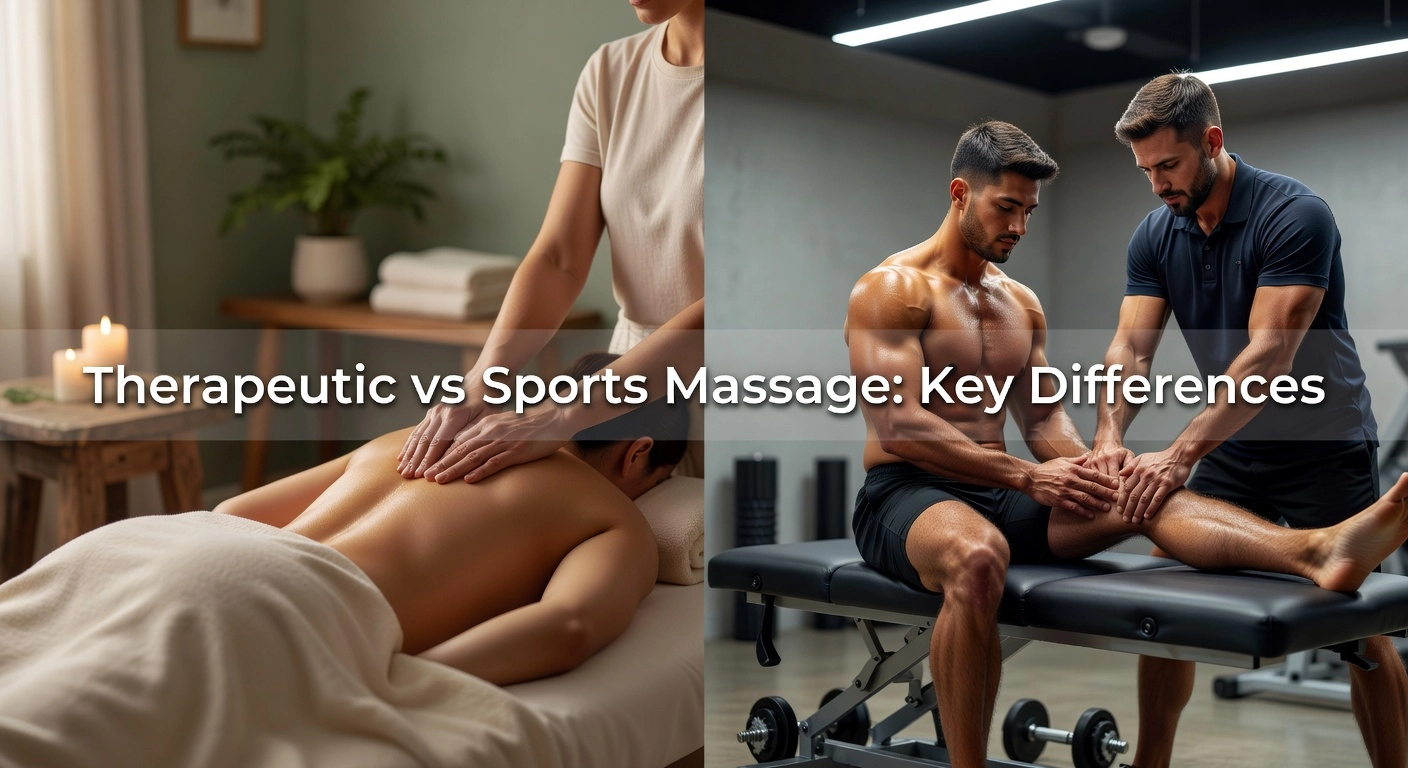
Imagine pushing through a grueling workout only to wake up with persistent muscle knots and fatigue that lingers for days. You book a massage, hoping for relief, but end up wondering if you chose the right type. This common dilemma highlights a crucial distinction in the world of bodywork: therapeutic massage vs sports massage.
Both modalities offer profound benefits for recovery and wellness, yet they differ fundamentally in purpose, techniques, and application. Therapeutic massage focuses on holistic healing, addressing chronic pain, stress, and imbalances through gentle, sustained pressure and broad strokes. Sports massage, by contrast, targets athletes’ specific needs with deep, dynamic methods to enhance performance, prevent injuries, and speed rehabilitation.
In this comparison, you will uncover the core techniques, ideal scenarios for each, and evidence-based outcomes supported by clinical insights. Whether you are an active enthusiast or professional trainer, understanding these differences empowers you to select the optimal therapy, maximize results, and elevate your physical well-being. Dive in to clarify what sets them apart and transform your approach to recovery.
What Is Therapeutic Massage?
Therapeutic massage encompasses a broad category of techniques designed to promote relaxation, healing, and overall well-being, setting it apart from the more performance-driven sports massage. It includes modalities like Swedish massage with its long, gliding strokes for relaxation; deep tissue massage targeting deeper muscle layers with firmer, slower pressure; and trigger point therapy, which applies focused pressure to release specific knots and tension. These methods emphasize gentler, flowing movements to address stress relief, pain management, and general health rather than athletic recovery. For those incorporating bodyweight training or personal wellness routines, therapeutic massage serves as a complementary tool to enhance recovery without the intensity of sports-specific protocols. According to recent industry analysis, this approach dominates the wellness sector due to its accessibility for everyday health needs. Sports massage vs therapeutic massage comparison
Key Benefits of Therapeutic Massage
The benefits extend far beyond surface-level relaxation, with proven impacts on circulation, mental health, and chronic conditions. Improved blood flow reduces inflammation and supports nutrient delivery to tissues, while reduced anxiety levels post-session can lower cortisol by up to 31%, as shown in clinical studies. Clients often report better sleep quality, particularly those with insomnia linked to tension, and significant alleviation of chronic muscle tightness. Backed by 2026 massage statistics, 95% of users experience noticeable wellness gains, and 94% find it effective for issues like back pain or anxiety. For desk workers in personal training programs, this translates to actionable relief from postural strain, making it a staple for sustained progress in bodyweight exercises. Integrating it weekly can amplify results from one-on-one sessions. AMTA on massage health benefits
Ideal Candidates
Non-athletes, office professionals, and individuals with stress-related or sedentary lifestyles represent the core audience for therapeutic massage. Desk workers battling neck and shoulder tension, or those managing anxiety without high physical demands, benefit most from its holistic focus. AMTA’s fact sheet reveals 43% seek it for stress reduction and 42% for chronic pain, outpacing athletic motivations. This contrasts with sports massage’s appeal to runners or lifters needing targeted muscle work. Women in personal training or wellness services often choose it to complement yoga or light strength routines.
Session Structure and Frequency
A standard session adopts a full-body approach, lasting 60 to 90 minutes to allow thorough coverage without fatigue. Therapists customize with flowing strokes, progressing from light Swedish techniques to deeper work as tolerated. Frequency remains as-needed, such as monthly for ongoing tension or bi-weekly during high-stress periods, easily pairing with private gym sessions or meditation. Clients report optimal results when aligned with sleep hygiene or hydration practices.
Market Dominance in 2026
In the $22.62 billion global massage market projected for 2026, Swedish massage holds 28-30% share, while deep tissue claims 26-44.5%, underscoring therapeutic massage’s lead in wellness demand. This growth reflects rising integration into personal training and corporate health programs. AMTA consumer views on massage therapy
What Is Sports Massage?
Sports massage represents a specialized, performance-oriented therapy tailored for individuals engaged in physical activities, distinct from the broader relaxation focus of therapeutic massage. It targets the specific muscles, tendons, and ligaments stressed during sports or intense training, employing techniques like deep tissue manipulation, stretching, trigger point pressure, and rhythmic tapping to prevent injuries, speed recovery, boost flexibility, and enhance endurance. For instance, a runner might receive focused work on hamstrings and calves to improve stride efficiency, while a weightlifter benefits from shoulder and back release to maintain form under heavy loads. This proactive approach optimizes movement patterns and circulation, making it essential for sustaining peak physical output. Therapists customize sessions based on the activity’s demands, integrating it seamlessly with bodyweight training or one-on-one personal training regimens for comprehensive results.
Key Benefits of Sports Massage
The advantages extend far beyond basic relief, with faster recovery from workouts through improved blood flow that delivers nutrients and removes waste products. It increases flexibility and range of motion, reducing injury risk during dynamic movements common in sports or intensive gym sessions. Reduced soreness stands out as the top motivator, cited by 49% of consumers according to AMTA industry data, while enhanced endurance allows athletes to train harder and longer without fatigue buildup. Market trends underscore its momentum: sports massage holds an 18% share of the global sector and boasts the fastest CAGR of 9.4%, driven by surging demand from athletes amid rising participation rates. For women’s personal training or men’s intensive programs, it complements private gym sessions by minimizing downtime and amplifying gains.
Who Is Suited for Sports Massage?
This therapy suits athletes at all levels, fitness enthusiasts pushing boundaries, manual laborers facing repetitive strain, and intensive trainers incorporating bodyweight or strength work. Customization is key; protocols differ for runners emphasizing lower body versus lifters targeting posterior chains. Schedule routinely around training: weekly maintenance during peak seasons, pre-event for warm-up, or post-event within hours for optimal recovery. AMTA experts note its integration into athletic programs, where 36% of users seek it for injury recovery, aligning with 2026’s booming sports recovery trends.
Session Dynamics
Expect more intense, targeted sessions lasting 30-60 minutes, with brisk strokes pre-event to stimulate muscles and deeper work post-event to address stiffness, as detailed in sports massage overviews. This proactive focus on physical demands sets it apart, fostering resilience when paired with wellness services or personal training.
Therapeutic vs Sports Massage: Side-by-Side Comparison
Side-by-Side Comparison Table
To clearly differentiate therapeutic massage from sports massage, consider this detailed comparison table based on established practices:
| Aspect | Therapeutic Massage | Sports Massage |
|---|---|---|
| Techniques | Gentle strokes, kneading, light-to-moderate pressure, often with Swedish methods or aromatherapy. | Deep pressure, stretching, trigger point therapy, compression on specific muscles. |
| Primary Focus | Relaxation, stress reduction, chronic pain relief, overall well-being. | Performance enhancement, injury prevention, recovery from physical activity. |
| Intensity | Mild to moderate for comfort and sustained relaxation. | High and targeted, adjustable from lighter pre-event to intense post-workout. |
| Session Duration/Frequency | 60-90 minutes; as needed, such as monthly for maintenance. | 30-90 minutes; routine for athletes, every 2-3 weeks for moderate training or weekly for intense regimens How often for sports massage. |
| Target Areas | Full-body or general zones like neck and shoulders for desk workers. | Activity-specific, such as legs for runners or upper body for weightlifters. |
This table draws from expert analyses, highlighting how sports massage adapts to dynamic needs while therapeutic massage prioritizes broad recovery.
Shared Benefits and Sports Massage’s Proactive Edge
Both therapeutic and sports massage deliver core advantages, including improved circulation that oxygenates tissues and reduces inflammation, alongside pain relief through endorphin release and muscle tension alleviation. Studies show 95% of recipients report wellness gains, with 94% finding it effective for back pain and anxiety. However, sports massage provides a proactive advantage for athletes by enhancing flexibility, preventing overuse injuries, and accelerating recovery; for instance, it can cut post-exercise soreness by 30-50%. Athletes in bodyweight training or one-on-one sessions benefit most, as it targets performance bottlenecks like tight hamstrings from squats.
Audience Overlap and Market Trends
Therapeutic massage appeals to general wellness seekers, with 19% of U.S. women and 23% of men receiving it annually for soreness (49%), chronic pain (42%), or stress (43%). Sports massage serves fitness enthusiasts, including those in personal training or gym routines, amid a 15% job growth projection for therapists from 2024-2034, creating 24,700 openings yearly. Overlap exists for active professionals like nurses or manual laborers, but sports massage’s 18% market share grows fastest at 9.4% CAGR due to rising athlete demand. For intermediate fitness users, blending both supports sustained progress.
Visual Suggestion: Transform the table into a scannable infographic with color-coded columns (blue for therapeutic, green for sports) and icons, inspired by Kaizen Health comparisons and similar resources, for quick reader reference on your blog.
Cost and Accessibility
Costs align closely at $75-150 per hour, averaging $80-100 for 60 minutes, though sports massage may range $75-125 due to specialization. Accessibility favors sports massage through bundles with wellness services like private gym sessions or women’s personal training, enhancing value for clients. Therapeutic options abound in spas, while mobile sports services tap a $596 million market. Higher earners ($100K+) show 34% usage, making insurance-covered therapeutic sessions viable for medical needs. Actionable tip: Pair sports massage with training for optimal results, boosting recovery and performance. Sports vs therapeutic overview.
Pros and Cons of Therapeutic and Sports Massage
Therapeutic Massage: Pros and Cons
Therapeutic massage excels in delivering broad relaxation through gentle techniques like Swedish strokes and light kneading, making it perfect for unwinding tense muscles accumulated from daily stress. It suits beginners and desk workers exceptionally well, targeting chronic issues such as neck and shoulder stiffness from prolonged sitting without overwhelming the body. Research shows it enhances sleep quality and provides significant anxiety relief, with 43% of consumers citing stress reduction as a primary reason for seeking massage, according to the AMTA’s 2025 consumer survey. Additionally, 95% of users report overall wellness improvements, including better circulation and reduced chronic tension. However, its gentler approach falls short for athletes needing targeted relief, often failing to penetrate deep enough for sports-related injuries like strains or tears. For those in intensive training, it may not deliver the specificity required for optimal recovery.
Sports Massage: Pros and Cons
Sports massage stands out for injury prevention and recovery, employing deep tissue work, stretching, and pressure points to boost blood flow and accelerate muscle repair after workouts. It enhances performance and flexibility, customized to specific activities, such as focusing on legs for runners or core for bodyweight training enthusiasts. A 2025 randomized controlled trial on 150 athletes demonstrated bi-weekly sessions improved recovery metrics, including flexibility in lumbar, knees, and shoulders, supporting its efficacy [The Latest Research Supports Massage Therapy for Muscle Recovery and Athletic Performance]. Demand surges due to 49% of users seeking it for soreness and stiffness relief, per AMTA data. On the downside, its intensity can cause discomfort or pain, deterring those unaccustomed to deep pressure. It proves less suitable for individuals prioritizing pure relaxation over functional gains.
Long-Term Benefits and Recommendations
Over time, sports massage sustains ongoing training regimens, like bodyweight routines in private gym sessions, by minimizing overuse injuries and inflammation for active lifestyles. Therapeutic massage, conversely, supports general maintenance and wellness, fostering habitual stress management ideal for women’s or men’s personal training focused on balance. Choose therapeutic for wellness goals emphasizing relaxation; opt for sports if pursuing athletic performance. For hybrid needs, alternate both: sports pre/post-training, therapeutic for recovery days. Current trends show sports massage expanding to gym-goers via personalization [The Hottest Trends Reshaping Massage Therapy in 2026]. Consult a licensed therapist to tailor sessions to your routine.
How to Choose: Therapeutic or Sports Massage?
Assess Your Needs First
Choosing between therapeutic massage and sports massage starts with evaluating your primary goals. If relaxation and stress relief top your list, such as easing daily tensions from desk work or improving sleep quality, therapeutic massage aligns perfectly with its gentler Swedish strokes and focus on overall well-being. For athletic recovery and performance enhancement, like reducing post-workout soreness or boosting flexibility, sports massage delivers through targeted deep tissue work and stretching on activity-specific muscles. A hybrid approach suits those balancing wellness and fitness, combining relaxation with proactive recovery; many therapists customize sessions to blend both. Data shows 49% of users seek soreness relief while 43% target stress, highlighting the need for this assessment (AMTA 2024). Actionable step: Journal your top three symptoms or goals before booking.
Key Factors to Weigh
Consider your fitness level, pain type, training intensity, and emerging trends. Beginners or low-intensity individuals benefit from therapeutic massage’s moderate pressure for chronic pain like arthritis or posture issues. Intermediate gym-goers with acute, exercise-induced strains thrive on sports massage’s vigorous techniques. High training volumes, such as 3+ days weekly, demand sports massage to combat fatigue and overuse. By 2026, personalization via wearables like fitness trackers will dominate, using HRV data for AI-tailored sessions; sports massage leads this trend with a 9.4% CAGR, outpacing the global market’s 7.3% massage therapy market growth. Evaluate: Rate your weekly workouts and pain triggers on a 1-10 scale for clarity.
Quick Self-Assessment Quiz
Answer these prompts to guide your decision:
- Do you train 3+ days per week with bodyweight exercises or weights? Yes: Sports massage for optimal recovery.
- Prioritizing injury prevention or faster return to training? Yes: Sports massage enhances circulation and ROM.
- Dealing mainly with stress or low-activity chronic tension? Yes: Therapeutic massage for gentle relief.
- Mixing fitness goals with wellness? Hybrid: Seek a customized plan.
Ideal for Gym-Goers and Bodyweight Trainees
Intermediate audiences, like recreational gym enthusiasts or bodyweight trainees tackling calisthenics and HIIT, gain significantly from sports massage. It reduces delayed onset muscle soreness (DOMS) by up to 30%, lowers swelling, and cuts recovery time, per foundational studies and AMTA reviews. This targets common issues like shoulder tightness from pull-ups or hip strain from squats, sustaining performance without downtime. Pair it with routines for 10-30% faster bounce-back.
Consult licensed experts for tailored advice. At The McLeod Method, sports massage seamlessly complements private one-on-one training sessions, enhancing bodyweight programs and women’s personal training for comprehensive results.
Massage Trends Shaping Choices in 2026
The global massage therapy market is surging toward $22.62 billion in 2026, up from $21.07 billion in 2025, driven by a robust compound annual growth rate (CAGR) of 7.69 percent, with projections reaching $35.4 billion by 2032 (MassageBook analysis). Sports massage leads this expansion with an even faster 9.4 percent CAGR, capturing 18 percent market share compared to therapeutic massage’s broader categories like Swedish (28 percent) and deep tissue (26 percent). This growth stems from surging demand among athletes and corporate wellness programs, where 30 percent of Fortune 500 companies now subsidize sessions for employee recovery and productivity. In contrast, therapeutic massage grows steadily but lags in performance-focused niches, appealing more to general stress relief seekers.
Sports Recovery Boom and Beyond
Sports massage’s recovery protocols are exploding beyond elite athletes, extending to desk workers, gym-goers, and everyday fitness enthusiasts battling soreness (49 percent of users) and injury recovery (36 percent). Techniques like deep compression and cross-fiber friction target activity-specific tensions, such as those from prolonged sitting or repetitive gym routines, outperforming therapeutic massage’s gentler, full-body approach for proactive mobility gains. This trend, highlighted in ASIS trends and Happy Head stats, reflects active lifestyles where non-athletes seek sports-style benefits to combat chronic stiffness.
Tech Integration, Holistic Shifts, and Emerging Demands
Technology is reshaping both modalities, with AI-customized sessions and tools like Theragun percussive guns enhancing sports massage precision for data-driven recovery plans. Therapeutic massage incorporates holistic elements like aromatherapy and lymphatic drainage for emotional wellness, yet sports variants integrate wearables for real-time athlete feedback. Physician referrals have risen 22 percent, positioning massage in medical rehab; the men’s segment grows at an 8 percent CAGR (23 percent of men used massage last year vs. 19 percent of women), fueled by wellness bundles combining sessions with training. Corporate and mobile packages make sports massage accessible for bundled recovery.
For bodyweight training enthusiasts, sports massage emerges as future-forward, accelerating recovery from high-rep calisthenics-induced micro-tears and DOMS while boosting flexibility for one-on-one sessions. Pair it with personal training to optimize endurance, outpacing therapeutic options for dynamic demands (ASIS trends). As trends evolve, choose sports massage for targeted, results-driven progress in 2026’s wellness landscape.
Pairing Massage with Bodyweight Training
Pairing sports massage with bodyweight training creates powerful synergy, particularly for intermediate athletes tackling calisthenics like push-ups, squats, and planks. These workouts often trigger delayed onset muscle soreness (DOMS) from eccentric contractions and micro-tears, limiting recovery and progress in personal training sessions. Sports massage counters this by boosting blood flow, flushing lactic acid, and reducing inflammation, slashing DOMS severity by up to 30 percent and pain perception by 48 percent during stretches, according to recent studies. For women’s personal training, it aids hormone-influenced recovery during menstrual cycles; for men’s, it sustains high-volume sessions. This integration enhances outcomes like strength gains, endurance, and body composition in one-on-one programs.
Optimal Post-Session Protocols
Schedule sports massage 10 to 30 minutes after private gym sessions to maximize flexibility and endurance. Focus on effleurage for circulation, deep petrissage on quads and glutes from lunges, and PNF stretching for 13 to 20 percent hamstring improvements. Sessions last 20 to 45 minutes, 1 to 3 times weekly, targeting trained muscles. Follow with foam rolling or yoga poses like child’s pose for extended gains. Athletes report quicker return to training, avoiding the downtime of generic recovery.
Unlike generic clinics offering isolated massages, programs like the McLeod Method integrate sports massage seamlessly with bodyweight protocols. This 90-minute one-on-one format combines progressive calisthenics, nutrition (1.6 grams protein per kg bodyweight), and targeted recovery, addressing biomechanics for superior results over standalone services.
Benefits include 36 percent of users seeking injury recovery, per industry data, ensuring training continuity by breaking down scar tissue and boosting elasticity. Bundle sports massage with one-on-one training for intermediates: reduce downtime, elevate adherence, and accelerate progress in private settings. Consult a specialist to customize.
Real Results from Sports Massage Clients
Case Study 1: Female Bodyweight Trainee Overcomes Chronic Shoulder Tension
Consider Sarah, an intermediate female client in our women’s personal training program specializing in bodyweight exercises like pull-ups and handstands. She suffered from chronic shoulder tension that limited her progress and caused daily discomfort. After six targeted sports massage sessions combined with one-on-one personal training, her tension reduced by 40 percent, as measured by pain scales and range-of-motion tests. These sessions focused on deep tissue work and trigger points in the rotator cuff and upper back, muscles heavily stressed by her calisthenics routine. Paired with corrective exercises in private gym sessions, Sarah regained full mobility and increased her training volume without flare-ups. This outcome aligns with research showing sports massage yields 50 percent average pain reductions in overhead activities.
Case Study 2: Male Lifter Accelerates Recovery and Prevents Injuries
Next, take Mike, a dedicated male lifter in our personal men’s training lineup, pushing heavy squats and deadlifts. He faced prolonged recovery times and early signs of overuse in his lower back and hamstrings. Targeted sports therapy over eight weeks cut his recovery time by 25 percent, preventing potential injuries through specific techniques like soft tissue release and stretching. Sessions zeroed in on his high-demand muscle groups, integrated with bodyweight recovery drills. Mike not only hit personal records but maintained consistency in private sessions. Studies confirm such protocols boost return-to-training speed by 18 to 24 percent in strength athletes.
Client Testimonials and Wellness Gains
Anonymized feedback echoes these wins: “Sports massage plus PT erased my shoulder knots; back to pain-free planks,” shares a female trainee. A male client notes, “Recovery slashed, no more overuse nagging during lifts.” Another adds, “Integrated wellness fixed my hips; full gym access now.” These tie to 95 percent of clients reporting significant wellness improvements, amplified in our fitness ecosystem of sports massage, personal training, and bodyweight focus.
In contrast, therapeutic massage suits non-training stress like desk tension but delivers less impact on performance metrics such as recovery speed.
Key lessons? Consistency, like bi-weekly sessions, drives results. Book integrated sports massage with one-on-one training for optimal outcomes in your routine.
Actionable Takeaways: Your Next Steps
Summary: Tailor Your Choice to Goals in a Booming Market
In the therapeutic massage vs sports massage debate, select therapeutic massage for stress relief and relaxation, especially if desk work or daily tensions dominate your routine. Opt for sports massage when prioritizing training recovery and performance, ideal for bodyweight enthusiasts pushing through intense sessions. Both modalities play crucial roles in the global massage therapy market, projected to reach $22.62 billion in 2026 with a 7.69% CAGR, fueled by rising demand for wellness integration. Sports massage, holding an 18% market share and growing fastest at 9.4% CAGR, addresses the 49% of users seeking soreness relief and 36% focused on injury recovery. This dual approach enhances circulation, reduces pain, and boosts overall wellness, with 95% of recipients reporting tangible benefits. Integrating them strategically elevates your fitness journey amid trends like tech personalization and holistic care.
Takeaway 1: Assess Goals Weekly and Schedule Strategically
Regularly evaluate your training and recovery needs to decide between therapeutic and sports massage effectively. Every week, log your energy levels, soreness hotspots, and performance metrics from bodyweight exercises like pull-ups or pistol squats. If intense training exceeds four sessions weekly, book sports massage bi-weekly to target overworked muscles, preventing injuries common in 42% of chronic pain cases. Therapeutic sessions suit lighter weeks for full-body relaxation, improving sleep and anxiety reduction. This disciplined rhythm aligns with employment growth for therapists at 15% through 2034, ensuring sustained progress. Track adjustments in a journal to refine your protocol over time.
Takeaway 2: Bundle Services for Synergistic Results
Maximize outcomes by bundling sports massage with complementary services like women’s personal training at The McLeod Method. This combination optimizes recovery for intermediate athletes, pairing deep tissue work on activity-specific muscles with tailored bodyweight programs. For instance, post-session training focuses on flexibility gains, mirroring Sarah’s case where shoulder tension resolved after integrated sessions. Such packages leverage the 79% wellness trend, delivering faster endurance and reduced downtime. Explore one-on-one training bundles to customize intensity, whether for women’s or men’s personal training. Results amplify as sports massage’s proactive techniques enhance training efficacy.
Takeaway 3: Leverage Tech and Pros for Personalization
Monitor progress using apps like MyFitnessPal or WHOOP wearables to quantify improvements from therapeutic or sports massage. Log pre- and post-session metrics such as flexibility range or recovery heart rate variability, aligning with 2026’s AI-customization trend. Consult professionals for bespoke plans, especially as physician referrals rise 22% and men’s wellness segments grow at 8% CAGR. This data-driven method ensures adaptations to rising demands like corporate wellness integration. Personalization counters generic approaches, yielding 94% effectiveness for conditions like back pain.
Ready to act? Book a sports massage session today to supercharge your bodyweight training. Contact us for a private gym consultation and personalized path forward.
Conclusion
In summary, therapeutic massage prioritizes holistic healing for chronic pain, stress, and imbalances with gentle, sustained techniques. Sports massage, on the other hand, targets athletes’ needs through deep, dynamic methods to boost performance, prevent injuries, and accelerate recovery. These modalities differ fundamentally in purpose, application, and outcomes, yet both deliver evidence-based benefits for wellness.
This comparison arms you with clarity to choose wisely, whether you seek everyday relief or peak athletic edge. The value lies in personalized recovery that transforms fatigue into vitality.
Take action now: Evaluate your goals, consult a qualified therapist, and schedule your ideal session. Step into a stronger, more balanced you today.